
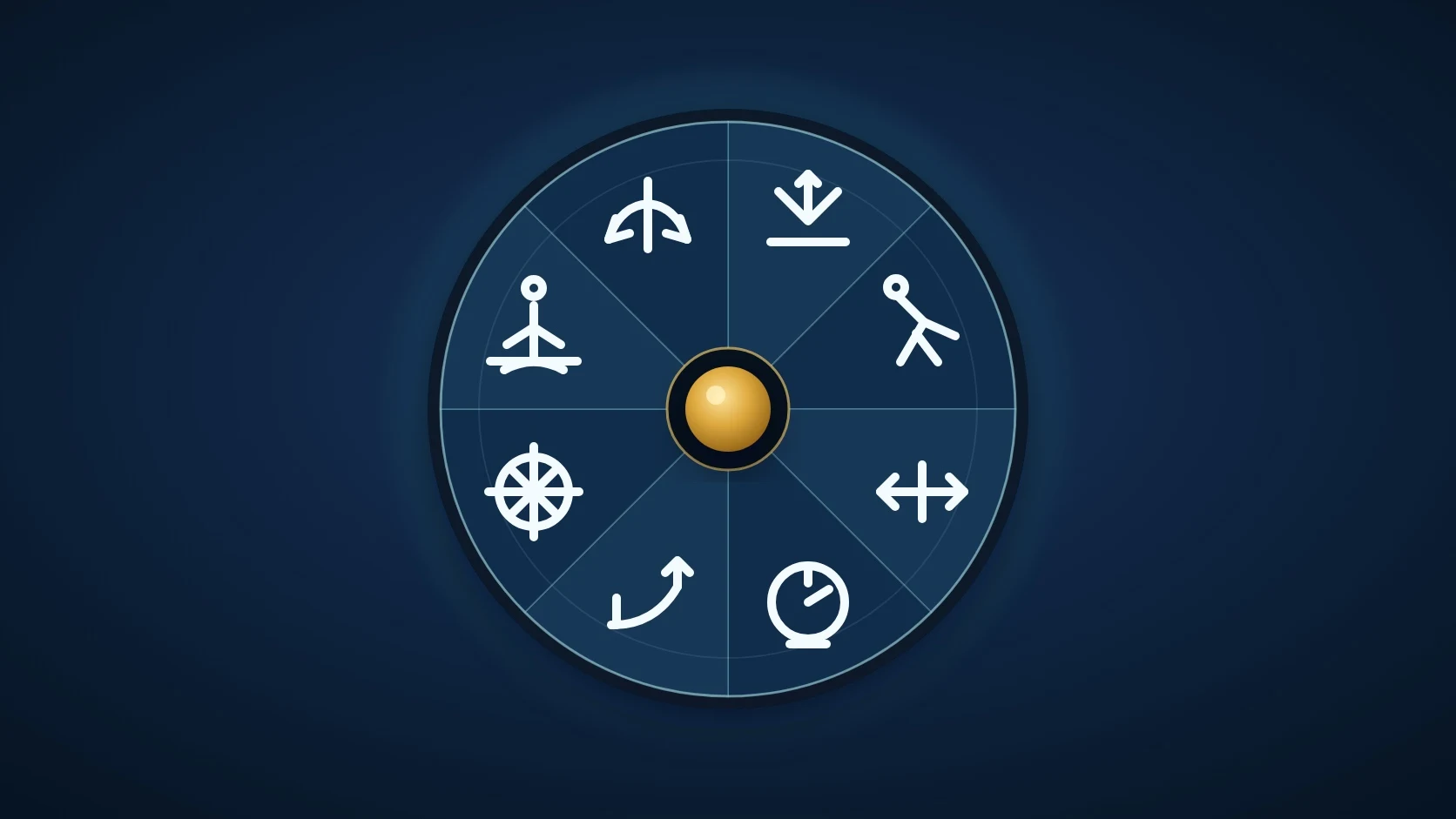
Which goal do you want to train?
The categories name each movement's main focus. An exercise can work several muscle groups, but it does not automatically replace a complete plan.
Controlled load acceptance
Bend at the knee and hip to slow your body as it lowers, then stand back up under control.
View exercisesSingle-leg strength: hamstrings and glutes
Keep your pelvis and standing leg steady while your hamstrings and glutes work.
View exercisesLateral control
Shift your weight sideways while keeping your foot, knee, and hip aligned.
View exercisesLocal strength endurance
Hold a controlled bent position over time.
View exercisesCalf and ankle
Control pressure through the forefoot and use the range you can manage.
View exercisesTrunk control
Keep your pelvis and ribcage steady while your arms and legs move.
View exercisesBalance
Pair a single-leg stance with a small, controlled extra task.
View exercisesControlled mobility
Move your arms, hips, and ribcage through a calm, comfortable range.
View exercisesEleven exercises with variations
Every number is an editorial starting example, not an individually tested prescription. End the set while you can still control the position, range, tempo, and normal breathing described here.
1 / 8
Controlled load acceptance
Bend at the knee and hip to slow your body as it lowers, then stand back up under control.
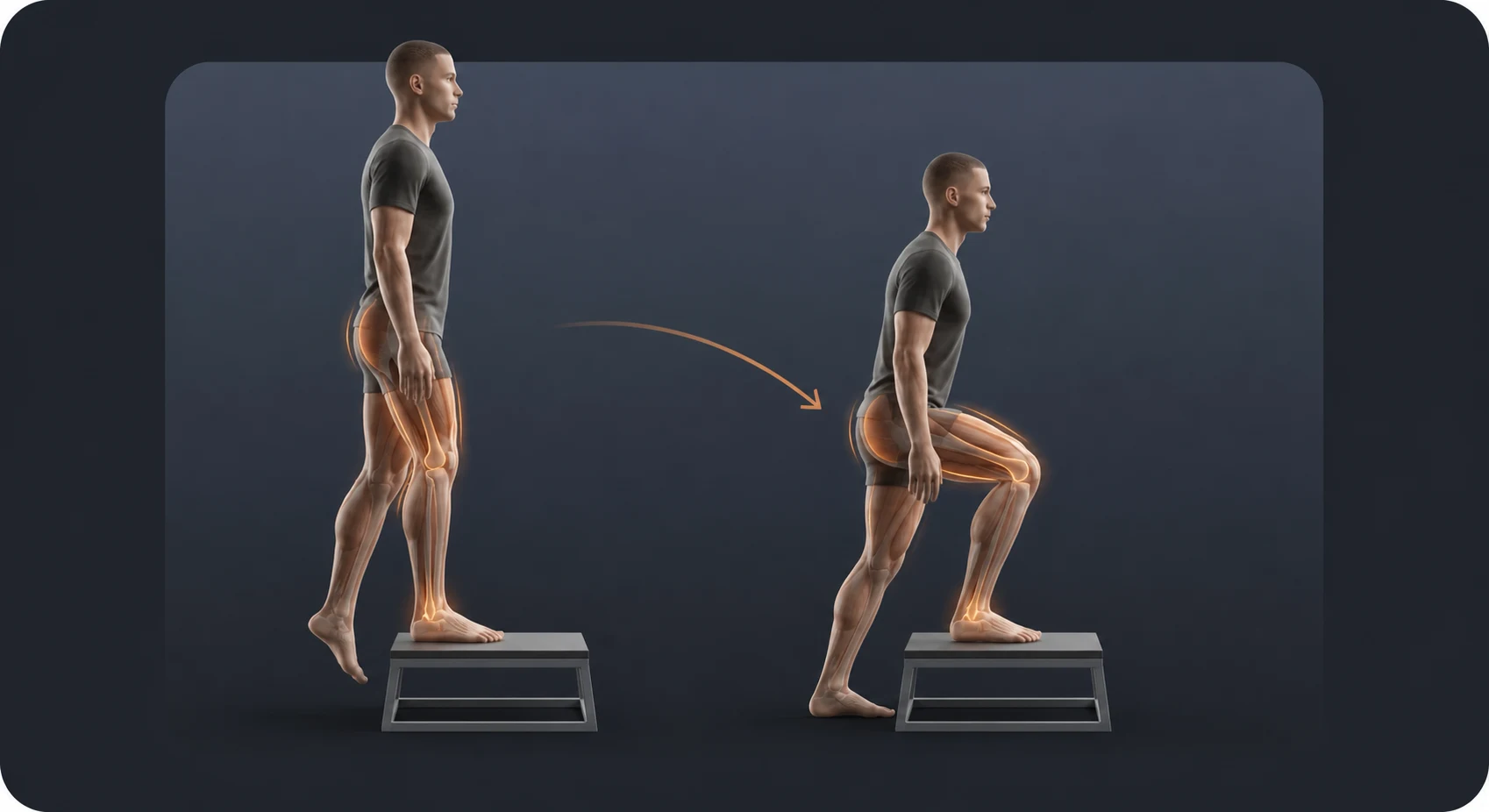
Eccentric step-down
- Mainly trains
- Controlled force absorption through your thighs, glutes, and standing leg.
- Starting position
- Place your whole working foot on a low, stable step. Keep the other leg free.
- How to do it
- Lower your free heel slowly and under control. Touch the floor lightly without loading the free leg, then press through your whole working foot to return.
- Editorial starting example
- Editorial example: 5–8 controlled reps each side. Add a second set only if alignment remains repeatable; rest until the same control returns, often about 60–90 seconds.
- Common mistake
- Your free heel drops fast, your pelvis tips, or your standing foot loses contact.
- Make it easier
- Use a lower step, hold a support lightly, or shorten the range.
- Make it harder
- First increase the controlled range. Add a small load only after that.
- End the set
- End the set when your pelvis, trunk, knee direction, controlled lowering, or light unloaded tap no longer stays steady.
Method sources: Hospital for Special Surgery: hip-strengthening exercises
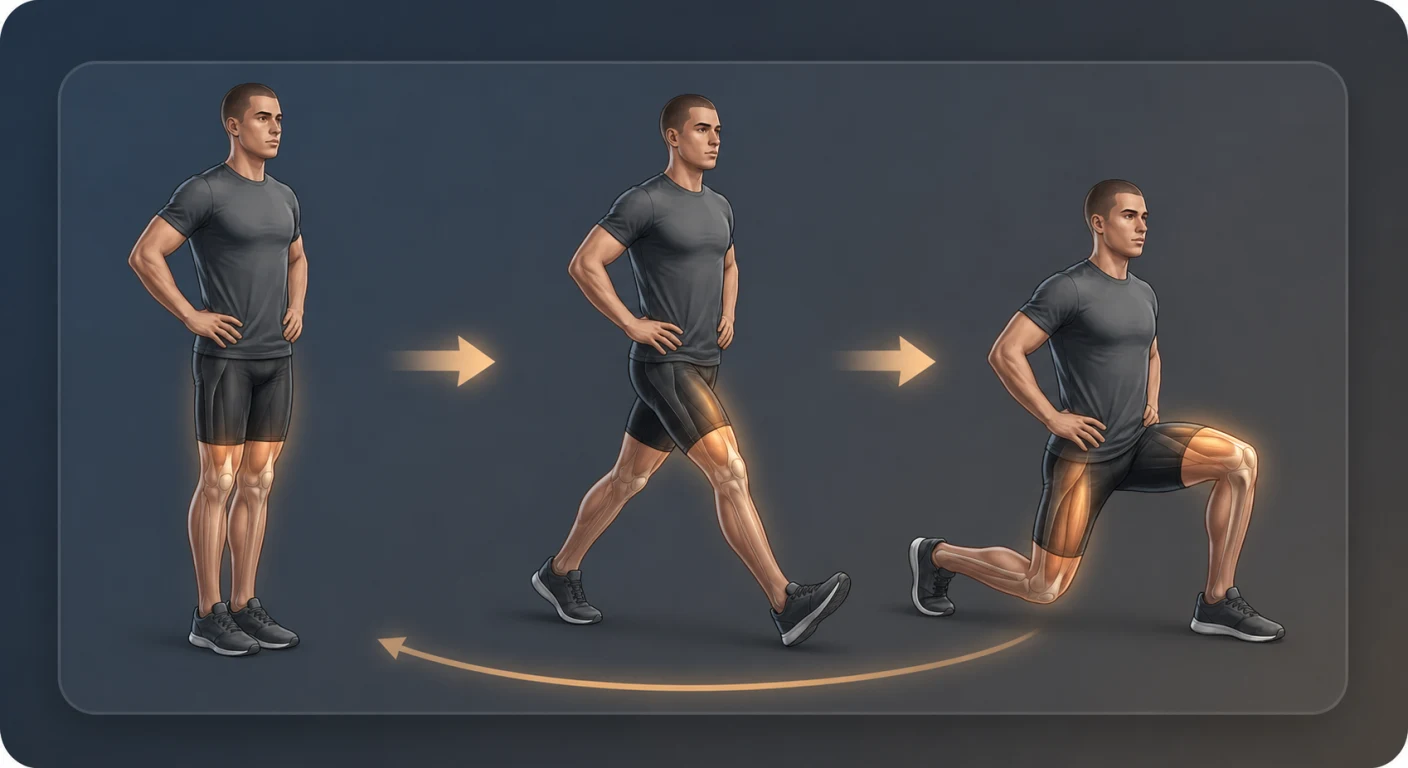
Forward lunge
- Mainly trains
- Leg strength and controlled load acceptance: bend your knee and hip to slow your lowering, then stand back up.
- Starting position
- Stand upright with your feet together and leave room for a comfortable step forward.
- How to do it
- Step one foot forward, lower with control, keep your torso position controlled, then press through your whole front foot to return steadily. Point your knee and toes in the same direction.
- Editorial starting example
- Editorial example: 5–8 controlled reps each side. Add a second set only if your stance remains stable; rest until the same control returns, often about 60–90 seconds.
- Common mistake
- Your step is too short, your front heel lifts, your knee falls inward, your torso drops out of control, or you cannot return steadily.
- Make it easier
- Stay in a split stance, hold a support, and move straight up and down.
- Make it harder
- Use more controlled depth or hold small weights at your sides.
- End the set
- End the set if you lose full contact through the front foot, your knee stops following the direction of your foot, your torso position becomes uncontrolled, or you cannot return to the start steadily.
Method sources: ACE: forward lunge
2 / 8
Single-leg strength: hamstrings and glutes
Keep your pelvis and standing leg steady while your hamstrings and glutes work.
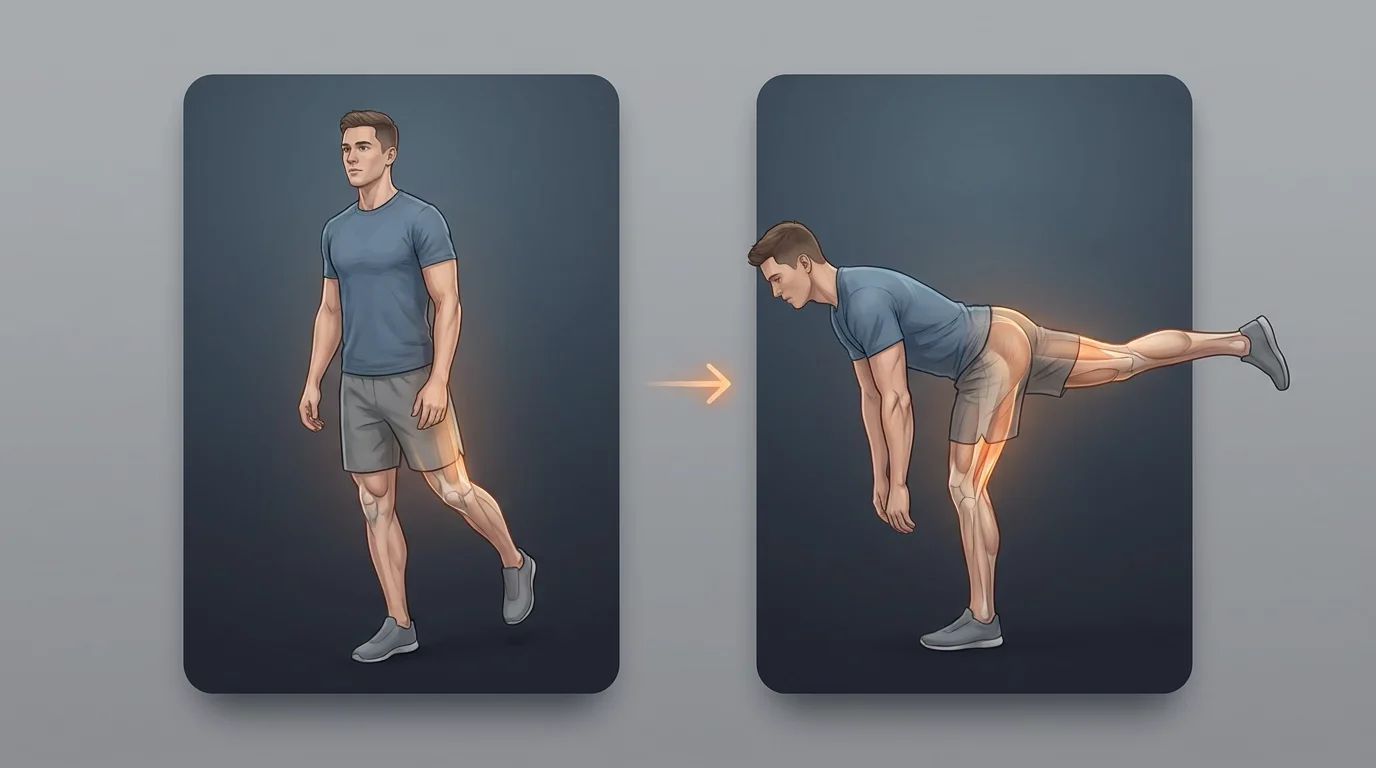
Single-leg Romanian deadlift
- Mainly trains
- Hamstrings, glutes, hip control, and single-leg balance.
- Starting position
- Stand on one slightly bent leg beside a stable support. Keep your pelvis level and facing forward instead of rotating open. Keep your back long.
- How to do it
- Send your hips back and reach the free leg behind you as a counterbalance. Return before your pelvis rotates open or your back rounds.
- Editorial starting example
- Editorial example: 5–8 controlled reps each side. Add a second set only if your pelvis stays level; rest until balance and hip control return, often about 60–90 seconds.
- Common mistake
- Your pelvis rotates open or drops, your back rounds, or you reach farther than your balance can control.
- Make it easier
- Touch a wall or rest the toes of your free foot lightly on the floor behind you.
- Make it harder
- Hold a small load in the hand opposite your standing leg.
- End the set
- End the set when your pelvis no longer stays level and square, your back rounds, or repeated balance corrections replace the hip hinge.
Method sources: Hospital for Special Surgery: hip-strengthening exercises, HJ Physical Therapy: single-leg Romanian deadlift
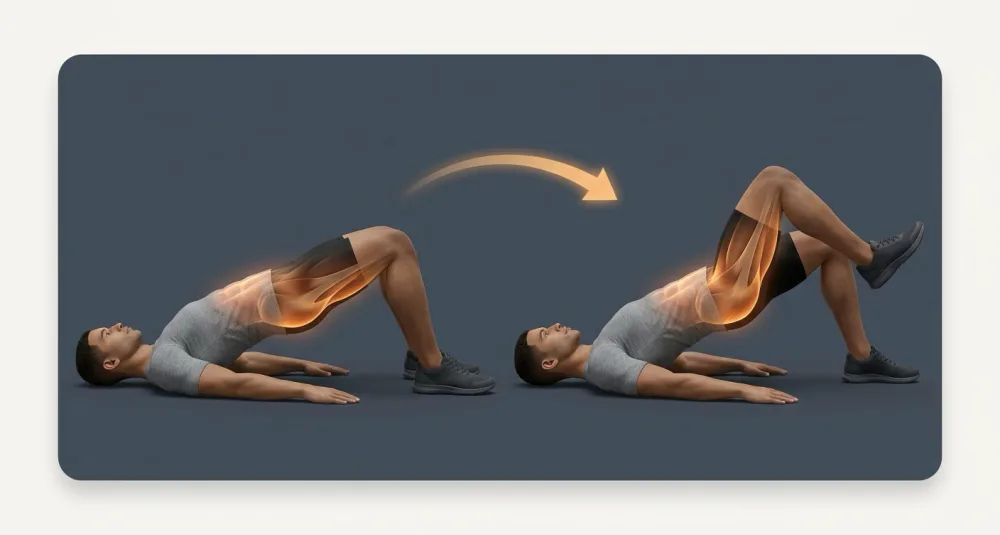
Glute bridge march
- Mainly trains
- Glutes, posterior chain, and pelvic stability while alternating leg load.
- Starting position
- Lie on your back, place both feet on the floor, and lift your pelvis.
- How to do it
- Lift one foot only as far as you can without letting your pelvis drop or tip sideways. Change sides slowly.
- Editorial starting example
- Editorial example: 5–8 controlled foot lifts each side. Add a second set only if your pelvis stays level; rest until the same control returns, often about 60–90 seconds.
- Common mistake
- Your pelvis shifts with every leg change or you use momentum.
- Make it easier
- Keep both feet on the floor and do a regular glute bridge.
- Make it harder
- Hover the foot briefly just above the floor without changing pelvic height or holding your breath.
- End the set
- End the set when you cannot keep your pelvis level and lifted.
Method sources: Hospital for Special Surgery: leg muscles and exercises, Royal National Orthopaedic Hospital: bridge foot lift
3 / 8
Lateral control
Shift your weight sideways while keeping your foot, knee, and hip aligned.
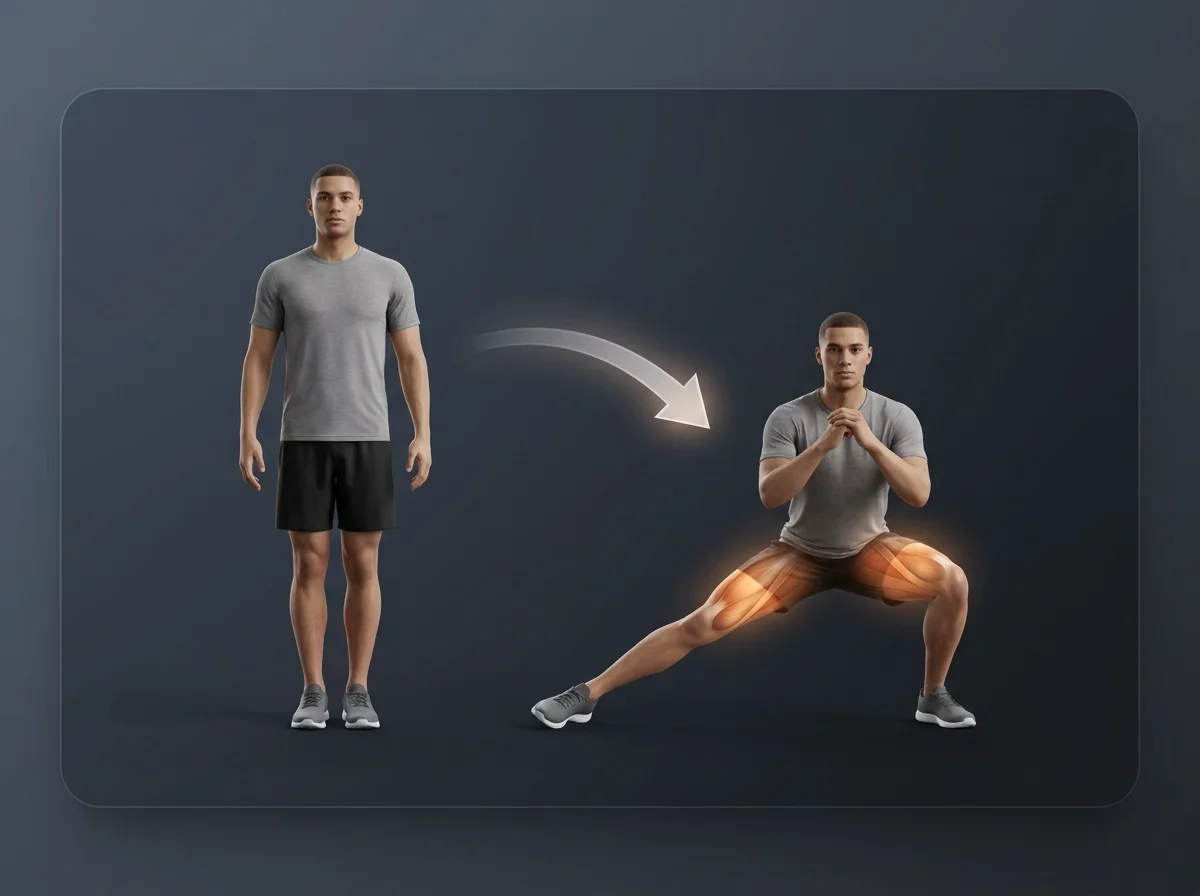
Side lunge
- Mainly trains
- Lateral weight shift, thighs, glutes, and hips.
- Starting position
- Stand with your feet about hip-width apart and leave enough room beside you for a comfortable step.
- How to do it
- Step to the side, send your hips back over the working leg, and keep both feet flat on the floor. Press through your whole working foot to return.
- Editorial starting example
- Editorial example: 5–8 controlled reps each side. Add a second set only if your foot and knee direction stay stable; rest until the same control returns, often about 60–90 seconds.
- Common mistake
- Your step is too wide, a heel lifts or a foot rolls, your knee falls inward, or your torso drops sharply forward.
- Make it easier
- Shorten the step and reduce the depth. Use a stable support if needed.
- Make it harder
- Increase the controlled depth first, then add a small load in front of your body. Do not increase both at once.
- End the set
- End the set if either foot loses full contact with the floor, your knee no longer follows the direction of your foot, or you use momentum to return.
Method sources: ACE: side lunge
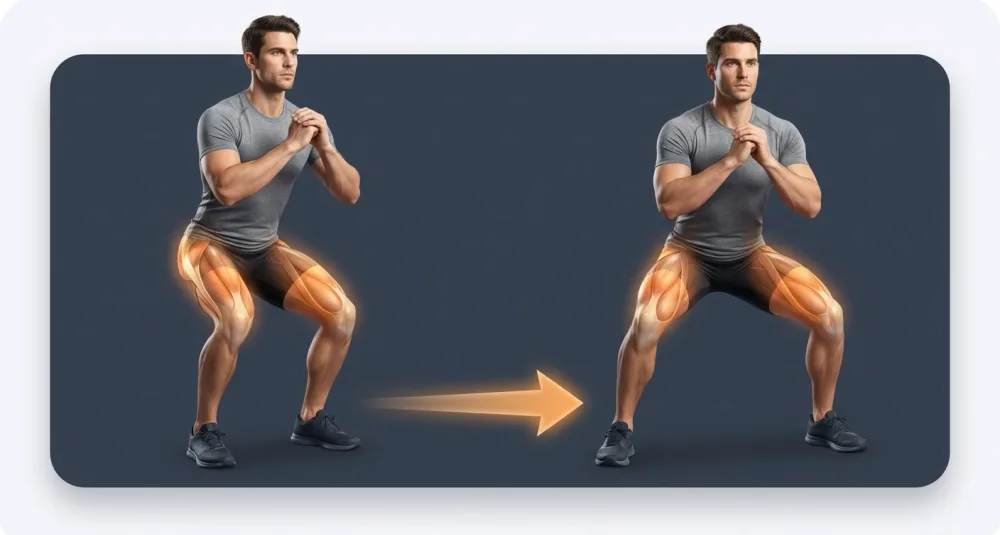
Lateral walk in a shallow squat
- Mainly trains
- Side hips, glutes, and repeated control in a shallow bend.
- Starting position
- Move into a shallow squat with your feet about hip-width apart.
- How to do it
- Step one foot sideways, then bring the other foot in under control. Keep your knees and toes pointing the same way.
- Editorial starting example
- Editorial example: 6–10 steps each direction. Add a second set only if stance height and alignment stay consistent; rest until the same step quality returns, often about 60–90 seconds.
- Common mistake
- Your feet knock together, your torso bounces, or your knees collapse inward.
- Make it easier
- Stand taller, take smaller steps, and work without a mini band.
- Make it harder
- Stay a little lower or add a light mini band without losing step quality.
- End the set
- End the set when you cannot control the height, direction, or quiet foot placement.
Method sources: Hospital for Special Surgery: hip-strengthening exercises
4 / 8
Local strength endurance
Hold a controlled bent position over time.
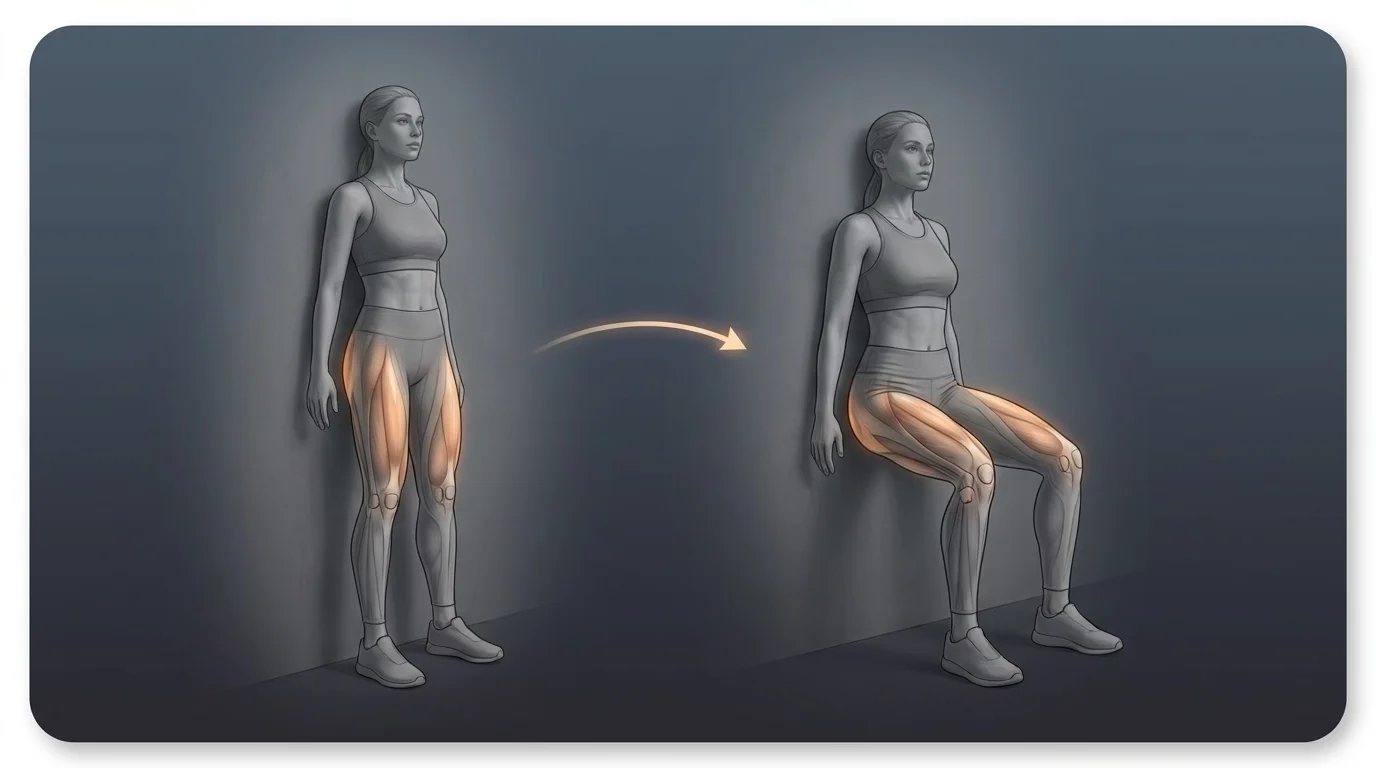
Wall sit
- Mainly trains
- Local strength endurance in your legs in a held position.
- Starting position
- Place your back and pelvis against a firm wall. Set your feet so they can stay fully loaded.
- How to do it
- Slide down only as far as your feet and knees stay calm. Keep breathing normally.
- Editorial starting example
- Editorial example: hold for 15–30 seconds once. Add a second hold only if foot pressure, knee direction, and breathing stay steady; rest often about 60–90 seconds.
- Common mistake
- You start too low, hold your breath, or push on your thighs with your hands at the end.
- Make it easier
- Stay higher or shorten the hold.
- Make it harder
- First extend the controlled hold slightly. Add a small load only in a later session.
- End the set
- End the hold before your feet or knees shift or you need to hold your breath.
Method sources: Whittington Health NHS: wall squat
5 / 8
Calf and ankle
Control pressure through the forefoot and use the range you can manage.
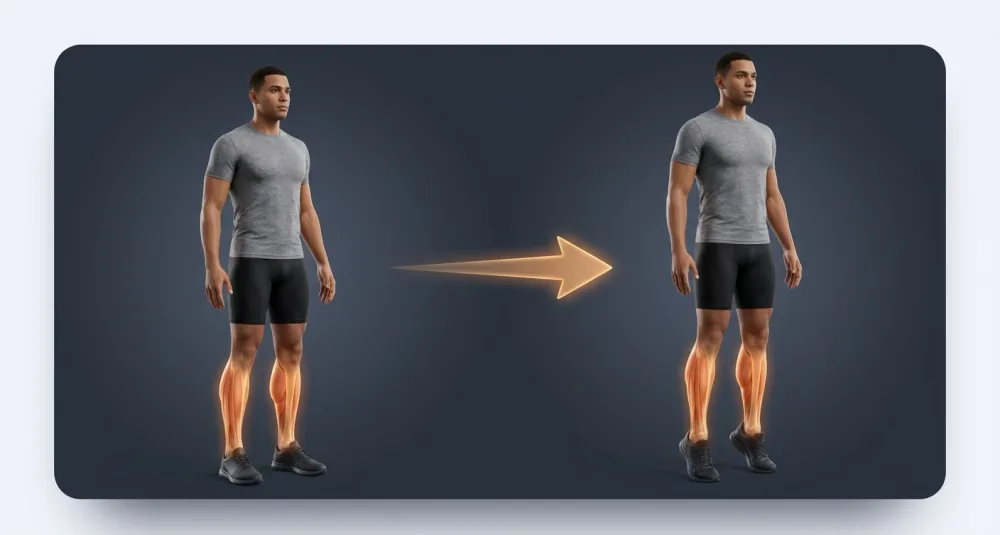
Calf raise
- Mainly trains
- Calves, feet, and a controlled ankle range.
- Starting position
- Stand tall with both feet flat on the floor and a stable support within reach.
- How to do it
- Lift both heels smoothly and lower them all the way under control. A brief pause at the top is optional.
- Editorial starting example
- Editorial example: 8–12 controlled reps. Add a second set only if height and lowering stay consistent; rest until the same control returns, often about 60–90 seconds.
- Common mistake
- Your ankles roll outward, your heels drop or lower without control, or you pull yourself up with the support.
- Make it easier
- Hold a support and reduce the height.
- Make it harder
- Move to a single-leg version only after your two-leg reps stay stable.
- End the set
- End the set if your heel height drops, your ankles roll, the lowering or heel contact becomes uncontrolled, or you start pulling with your hands.
Method sources: Hospital for Special Surgery: calf raise
6 / 8
Trunk control
Keep your pelvis and ribcage steady while your arms and legs move.
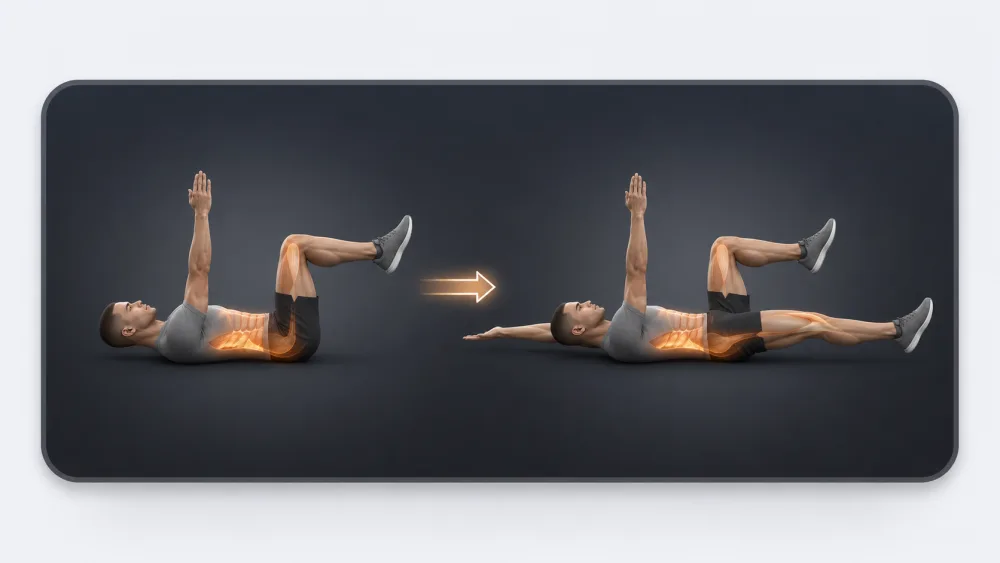
Dead bug
- Mainly trains
- Abdominal muscles and control of your pelvis and ribcage.
- Starting position
- Lie on your back. Raise your arms and legs, and keep your lower back quiet.
- How to do it
- Slowly extend one arm and the opposite leg. Keep breathing, then return to the middle.
- Editorial starting example
- Editorial example: 5–8 controlled reps each side. Add a second set only if your back position stays unchanged; rest until breathing and trunk control return, often about 60–90 seconds.
- Common mistake
- Your lower back lifts or you rush the rep.
- Make it easier
- Tap only one heel to the floor or move only your legs at first.
- Make it harder
- Reach your arm and leg closer to the floor without changing your back position.
- End the set
- End the set before your lower back lifts or your breathing catches.
Method sources: NASM: dead bug
7 / 8
Balance
Pair a single-leg stance with a small, controlled extra task.
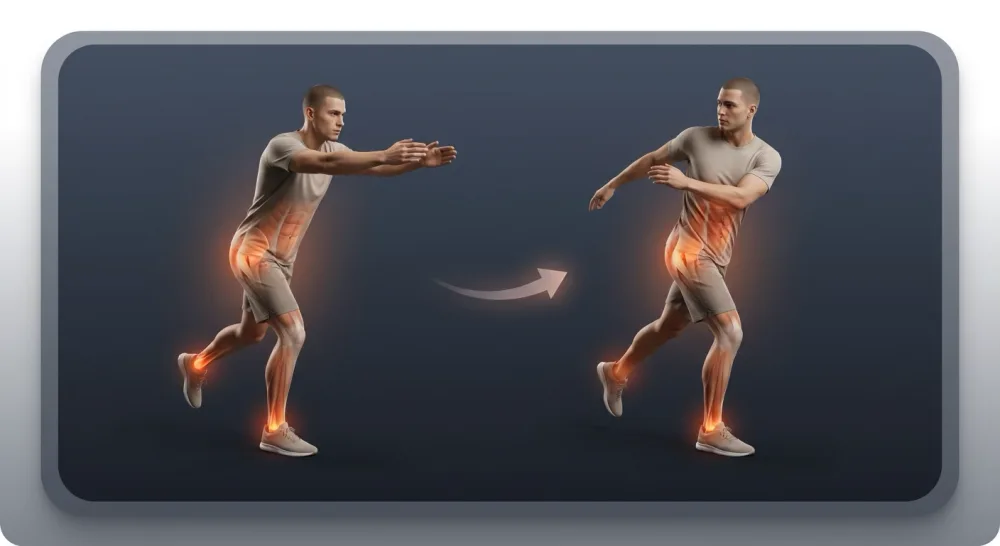
Single-leg stance with torso rotation
- Mainly trains
- Balance, alignment through your foot and leg, and controlled torso movement.
- Starting position
- Stand beside a wall on one slightly bent leg.
- How to do it
- Turn your ribcage slowly left and right. Return to the middle after each turn.
- Editorial starting example
- Editorial example: 3–5 slow turns each direction on each standing leg. Add a second set only if balance corrections stay small; rest until your stance is steady again, often about 60–90 seconds.
- Common mistake
- The turn gets large and fast while your foot or knee loses direction.
- Make it easier
- Touch the wall with one finger and make the turn smaller.
- Make it harder
- Take your hand off the wall or hold a light object in front of your body.
- End the set
- End the set when you need to put your foot down repeatedly or your knee and foot lose alignment.
Method sources: NHS: strength exercises and stable support, ACE: standing trunk rotation
8 / 8
Controlled mobility
Move your arms, hips, and ribcage through a calm, comfortable range.
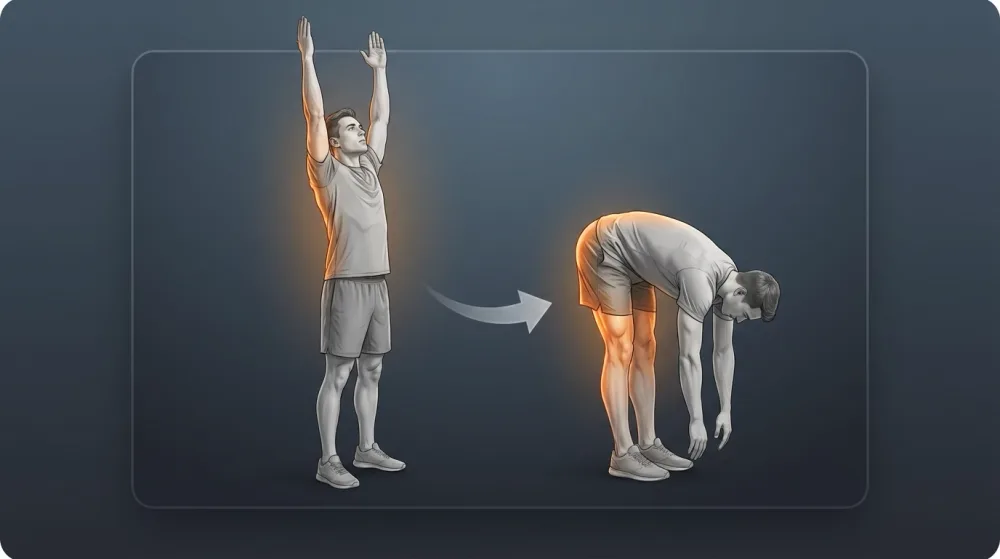
Standing reach and forward fold
- Mainly trains
- Controlled mobility through your shoulders, hips, and ribcage with calm breathing.
- Starting position
- Stand with your feet hip-width apart and keep your knees soft.
- How to do it
- Reach your arms up without arching your lower back. Then fold forward from your hips only as far as feels comfortable, and return under control.
- Editorial starting example
- Editorial example: 4–6 slow cycles. Pause as needed; no fixed rest interval is required.
- Common mistake
- You force the depth, lock your knees, use momentum, or arch your lower back during the reach.
- Make it easier
- Place your hands on your thighs and shorten the forward fold.
- Make it harder
- Increase the calm range without momentum or held breath.
- End the set
- End the movement when it becomes jerky, you need to force the depth, your lower back arches during the reach, or you cannot breathe normally.
Method sources: [P]rehab: controlled standing arm reach, Hospital for Special Surgery: standing forward fold
Choose a complete workout or plan
Understand the training components first
The conditioning guide explains why strength, endurance, control, mobility, and recovery serve separate goals.
Open the conditioning guideUse a complete leg session
The leg session places controlled force absorption, single-leg strength, lateral control, and strength endurance in order.
Open the leg sessionTrain calmly at home
The home workout puts six familiar movements in a fixed order without specialist equipment.
Open the home workoutFour weeks left before your trip
The short plan spreads two core sessions, optional endurance, and an easier final week.
Open the four-week planEight weeks or more available
The longer plan gives you time to learn, repeat, progress, and reduce work before your trip.
Open the eight-week planOrganise two or three sessions
Place your selected movements in a week without ignoring your existing training.
Open the weekly structureWhat research supports and what remains an editorial choice
Alpine skiing combines technical control with several physical demands. Much of the literature studies racing, so it does not provide a universal exercise selection for recreational skiers. Turnbull, Kilding and Keogh (2009): physiology of alpine skiing
In a small study of 24 healthy, fit recreational skiers, selected eccentric strength values were lower after four hours of skiing. This supports including work for the front and back of the legs, but it does not prove that one exercise is required. Koller et al. (2015): eccentric strength after prolonged recreational skiing
General reviews support progressive resistance training for healthy adults and find that momentary muscle failure does not need to be a standard goal. They do not test these 11 cards or their starting doses. ACSM (2026): resistance training for healthy adults, Grgic et al. (2022): failure versus non-failure resistance training, ACSM (2009): progression models in resistance training
Research on combined strength and endurance training and on warm-ups supports placing exercises in a wider programme. A small experiment in young male ski racers does not justify a general jumping recommendation for recreational skiers. Huiberts et al. (2024): concurrent strength and endurance training, Fradkin, Zazryn and Smoliga (2010): warm-up and performance, Vitale et al. (2018): neuromuscular training in junior alpine racers
Discuss your selection with the AI Coach
With your permission, SlopeReady can place existing training and recovery data from Apple Health alongside your saved preparation plan. Missing values remain missing.
The AI Coach can use your plan, profile, recent training summaries, and available recovery signals as context. You see a lasting plan change before you confirm it. See how suggestions, previews, and confirmation work in SlopeReady.
The app does not select these cards automatically, observe your technique, or record workouts, ski runs, GPS routes, or live heart rate.
Product behaviour checked on August 13, 2026. Terms of Use, Privacy Policy, How SlopeReady works