
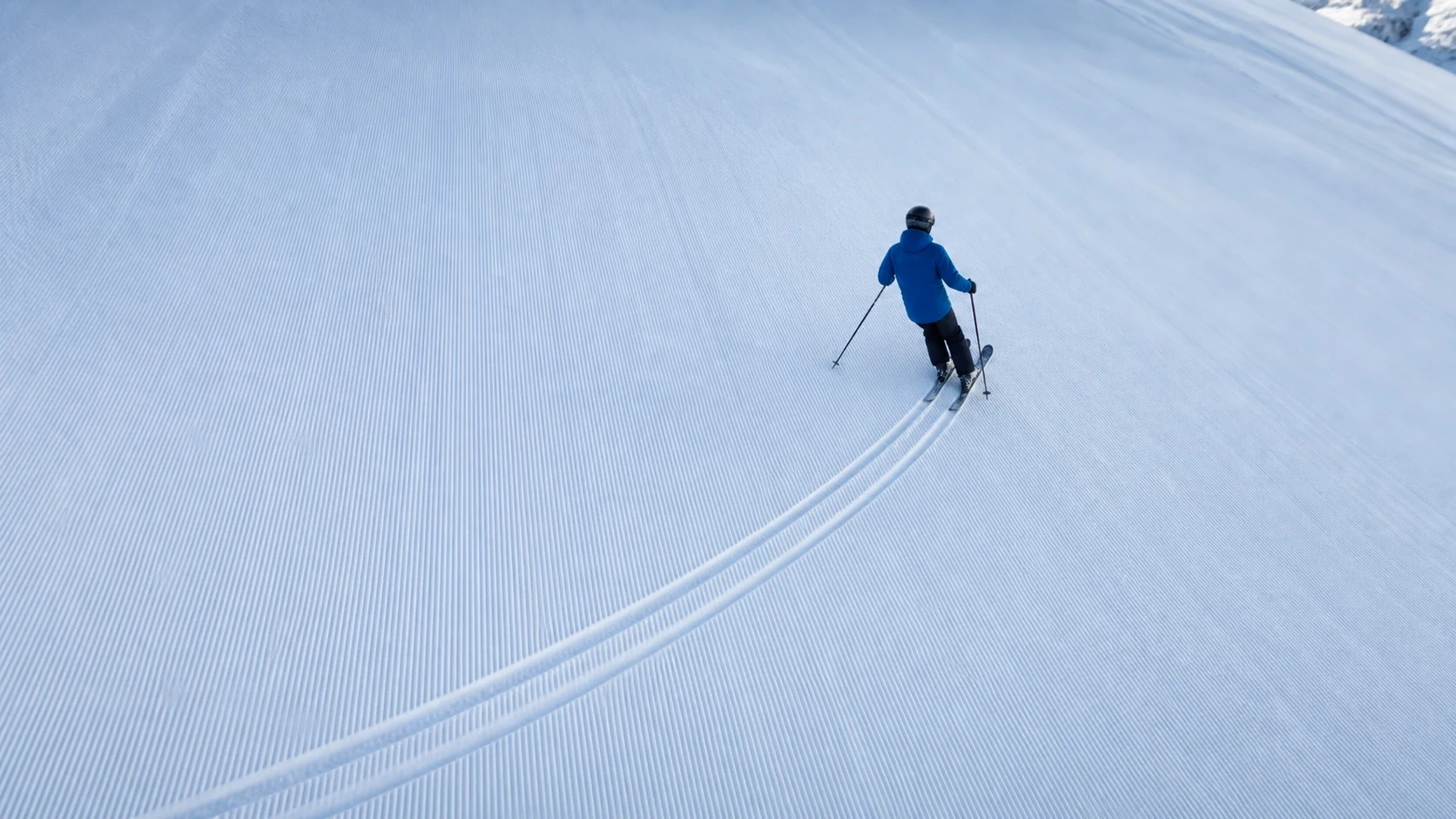
Choose your next step based on your situation
Start with the time left before your trip. If time does not decide the route, place your two or three weekly sessions first. Then choose the setting or a specific training focus. If several cards fit, open them in that order.
You have eight weeks or more
Eight-week plan
More time allows repeated practice, a calmer build, and an easier final week.
Go to the eight-week planYou have only four weeks left
Four-week plan
The short plan protects two repeatable core sessions and avoids a frantic final push.
Go to the four-week planYou can train two or three times per week
Weekly structure
This page shows how to distribute your available sessions without turning each one into the same mixed block.
Place two or three sessions in contextYou want to start at home, without equipment
Home workout
You get a complete, calm session with variations and a clear order.
Go to the home workoutYou want to target your legs
Leg session
The session combines controlled braking work, single-leg strength, lateral control, and muscular endurance.
Go to the leg sessionYou want to compare exercises by task
Exercises organized by training goal
The catalogue groups exercises by training goal and shows which movement each one addresses.
Compare exercises by training goalFrom skiing demands to training components
This table translates common demands on the slope into a training question. It is not a technique assessment or a complete plan.
| Skiing demand | Relevant training component | Practical question |
|---|---|---|
| Repeatedly bending, extending, and absorbing force | Leg strength, controlled slowing, and force absorption | Can you control the movement calmly even at the end of a set? |
| Many turns and runs across a longer day | Local muscular endurance and an aerobic base | Can you keep your rhythm without turning every session into an interval test? |
| Shifting load between your legs | Single-leg and lateral control | Can you align your foot, knee, hip, and trunk without forcing the movement? |
| Holding position while your arms and legs move | Trunk control | Do your pelvis and ribcage stay controlled as your limbs move? |
| Finding a useful position at the ankle, hip, and thorax | Usable mobility | Can you reach the needed position without compensating or forcing depth? |
| Repeating training without starting over each week | Recovery and consistency | Does the next session fit your whole week rather than one isolated measurement? |
Repeatedly bending, extending, and absorbing force
- Relevant training component
- Leg strength, controlled slowing, and force absorption
- Practical question
- Can you control the movement calmly even at the end of a set?
Many turns and runs across a longer day
- Relevant training component
- Local muscular endurance and an aerobic base
- Practical question
- Can you keep your rhythm without turning every session into an interval test?
Shifting load between your legs
- Relevant training component
- Single-leg and lateral control
- Practical question
- Can you align your foot, knee, hip, and trunk without forcing the movement?
Holding position while your arms and legs move
- Relevant training component
- Trunk control
- Practical question
- Do your pelvis and ribcage stay controlled as your limbs move?
Finding a useful position at the ankle, hip, and thorax
- Relevant training component
- Usable mobility
- Practical question
- Can you reach the needed position without compensating or forcing depth?
Repeating training without starting over each week
- Relevant training component
- Recovery and consistency
- Practical question
- Does the next session fit your whole week rather than one isolated measurement?
Six components to consider in ski preparation
No component works alone. Use these cards to spot a gap, then follow the relevant detailed guide.
1. Leg strength, controlled slowing, and force absorption
- What it supports
- Supports repeated bending and extending at the knee and hip, plus slowing a movement under control and absorbing load in bent positions.
- What it includes
- Squat, lunge, hip-hinge, and step-down patterns that suit your experience.
- How to check your choice
- Keep the movement controlled. More weight or depth does not count as progress if your position and tempo fall apart.
2. Local muscular endurance
- What it supports
- Helps the working muscle groups handle repeated load across sets and longer efforts.
- What it includes
- Repeatable leg movements and holds without driving every set to complete failure.
- How to check your choice
- You can still explain and control the planned movement instead of just collecting repetitions.
3. Aerobic base
- What it supports
- Supports the demands of several runs, walking routes, carrying equipment, and a long day.
- What it includes
- A familiar endurance activity, such as brisk walking, cycling, running, or hiking, that suits your current level.
- How to check your choice
- Endurance work complements strength work. It does not need to get harder every week or become a HIIT test.
4. Single-leg, lateral, and trunk control
- What it supports
- Trains alignment of the foot, knee, hip, and trunk while you shift weight and handle uneven loading.
- What it includes
- Single-leg stands, single-leg hip hinges, lateral steps or lunges, and controlled trunk work.
- How to check your choice
- A wall or a smaller movement is more useful than an unstable repetition that only looks spectacular.
5. Usable mobility
- What it supports
- Creates range of motion that you can use in a controlled position.
- What it includes
- Dynamic movements for the ankle, hip, and thorax, plus brief preparation before your first run.
- How to check your choice
- Mobility is not a depth contest. You can reach the target position calmly, without momentum.
6. Recovery and consistency
- What it supports
- Lets you repeat training instead of paying for every strong week with a forced one.
- What it includes
- Easy days, sleep, normal daily movement, and honest adjustments to the training already in your week.
- How to check your choice
- One poor measurement does not prove a single cause. Consider the trend and your whole week.
If you already run, cycle, or go to the gym
Do not automatically start from zero. First check which components your current training already covers. Regular cycling, for example, can support your aerobic base, but it does not automatically replace single-leg control or experience with slow force absorption.
Replace comparable work instead of piling several new lower-body sessions onto a full week. This guide helps you make the match; the specific plan pages handle the calendar and dosage.
Four thinking traps that make preparation harder than it needs to be
- Using only the burn in your quadriceps as your target.
- Turning balance exercises into a circus test on unstable equipment.
- Trying to maximize strength, endurance, and mobility in every session.
- Rebuilding a whole plan around one sleep, HRV, or readiness value.
What the research supports and where the limit lies
Alpine skiing places technical, neuromuscular, energetic, and sensorimotor demands on the skier. Because many studies examine racing, they do not provide an exact recreational training dose. Turnbull, Kilding and Keogh (2009): Physiology of alpine skiing, Ferguson (2010): Performance limits in alpine skiing, Burtscher et al. (2019): Demands and health context in downhill skiing
After prolonged skiing, recreational samples show changes in muscle coordination and selected eccentric strength values. That supports attention to the front and back of the legs, but not a specific training plan. Kröll et al.: Muscle coordination during prolonged recreational skiing, Koller et al. (2015): Eccentric strength after four hours of skiing
General reviews support resistance training, combined strength and endurance work, recovery, and preparatory movement. No source tests these six components as a universal ski program. ACSM (2026): Resistance training for healthy adults, Huiberts et al. (2024): Concurrent strength and endurance training, Kellmann et al. (2018): Consensus on recovery and performance, Fradkin, Zazryn and Smoliga (2010): Warm-up and performance
How SlopeReady can support your next step
With your permission, SlopeReady reads existing training and recovery data from Apple Health. The app places the available information in context with your saved preparation plan. Missing values remain missing.
The AI Coach can use the plan, your profile, recent training summaries, and available recovery signals as context and suggest a change. You see a lasting change before you confirm it.
SlopeReady does not observe your technique or record workouts, ski runs, GPS routes, or live heart rate. The app does not replace ski instruction or a personal medical or physiotherapy assessment.
Product behavior verified on August 12, 2026. Terms of Use, Privacy Policy