
This weekly schedule is a general example of how to organise training, not an individual programme. It does not account for pain, medical limitations, training experience, other training, or recovery.
The three-session week
On a small screen, swipe the table sideways to see the time and purpose columns.
| Day | Session | Time | Purpose |
|---|---|---|---|
| Monday | Strength A | 35–45 min | Thighs, glutes, posterior chain, calves, and trunk |
| Tuesday | Rest or an easy walk | optional 20–40 min | Recover without turning another day into a required workout |
| Wednesday | Easy endurance | 40–60 min | Steady, controlled aerobic work |
| Thursday | Rest | — | Create space before the second strength session |
| Friday | Optional mobility flow | 3–6 min | Gentle movement if it feels useful |
| Saturday | Strength B | 35–45 min | Lateral hips, glutes, hamstrings, single-leg balance, and upper back |
| Sunday | Rest or an easy walk | optional 20–40 min | Recover before the next week |
The weekday names are placeholders. Keep the order and move the sessions to the days you actually have. If your week only allows Tuesday, Thursday, and Sunday, the same structure still works. Do not squeeze a missed session into the next day just to complete the calendar.
Why the week is arranged this way
Strength and endurance training provide a general physical base. The 2026 ACSM position stand summarises resistance-training evidence in healthy adults. It did not test this ski week or these exercises. The meta-analysis by Huiberts and colleagues shows that strength and endurance training can be combined, but it does not establish one universal order for the sessions.
Alpine skiing places demands on the legs, balance, and movement control. The review by Turnbull, Kilding, and Keogh focuses mainly on ski racers. Koller and colleagues measured fatigue after four hours of skiing in 24 fit recreational skiers. Neither source shows that this exercise set is effective.
None of the linked studies tested this exact selection of exercises, repetitions, rests, or weekly schedule. The Suva beginner page presents short exercise sessions and endurance advice separately, not this plan. These sources therefore do not directly support the specific exercise choices and doses shown here.
Before each strength session: get warm
Spend five to eight minutes moving at an effort that raises your temperature without leaving you breathless. Walking, easy cycling, or marching in place is enough. Then do one rehearsal set of each of the first two exercises through a shorter range. These two rehearsal sets do not count towards the three listed working sets.
The stated 35–45 minutes is a rough estimate that includes the warm-up. If setting up support or moving with control takes longer, extend the session instead of cutting rests or rushing repetitions.
Strength A: legs, posterior chain, and trunk
This session pairs a knee-dominant movement with a single-leg hip hinge, calf work, and controlled trunk tension. Move without rushing. The final set can feel hard, but it should still resemble the first set.
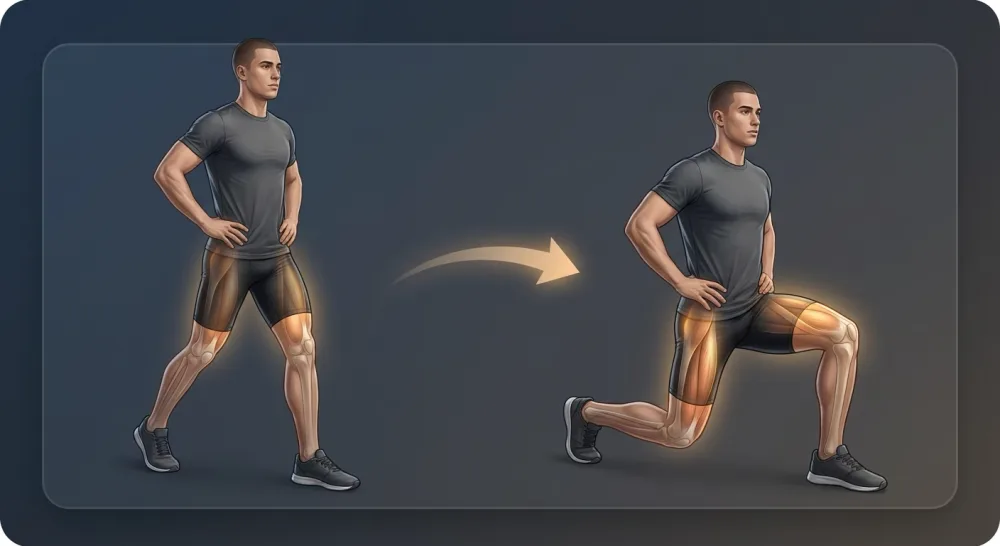
Exercise 1
Forward lunge
- Volume
- 3 × 10 each side
- Rest
- 60 seconds
- Main task
- Knee extension and hip drive
Take a long enough step to lower under control. Let the front knee follow the direction of the toes and keep your torso upright. Hold a chair lightly or use a shallower range if balance limits the movement.
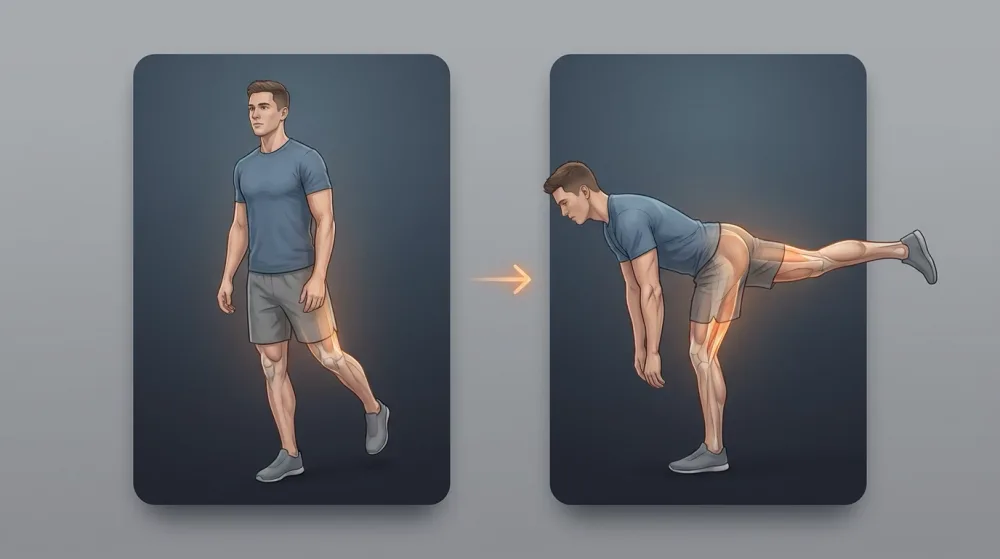
Exercise 2
Single-leg Romanian deadlift
- Volume
- 3 × 10 each side
- Rest
- 60 seconds
- Main task
- Hip extension, hamstrings, and single-leg control
Hinge from the hip while the free leg travels behind you. Keep your back and pelvis quiet. Use a wall for support and shorten the movement when your back rounds or you lose control.
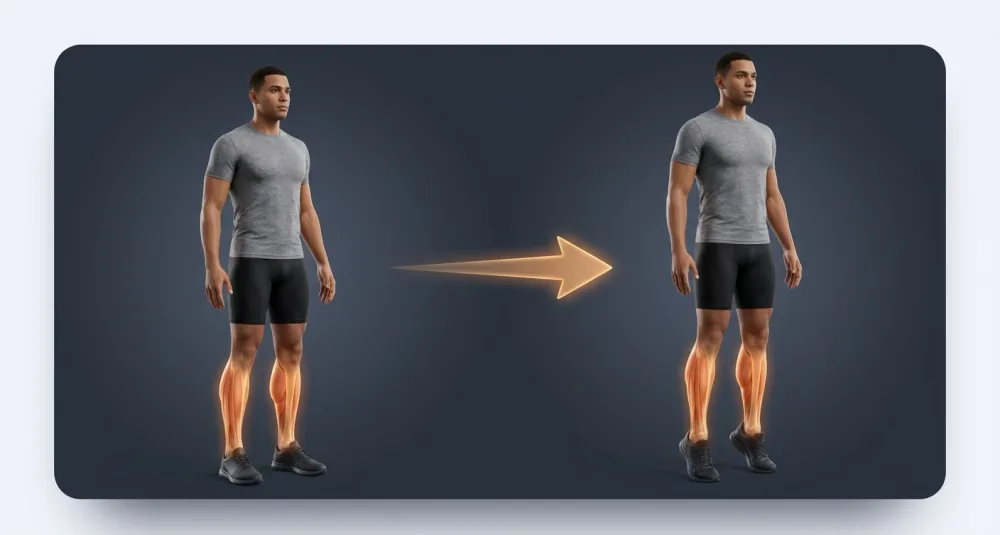
Exercise 3
Calf raise
- Volume
- 3 × 15
- Rest
- 45 seconds
- Main task
- Calf strength and ankle control
Rise onto the balls of both feet, pause briefly, and lower slowly. Keep the ankles tracking straight instead of rolling outward. Use a wall or chair for balance.
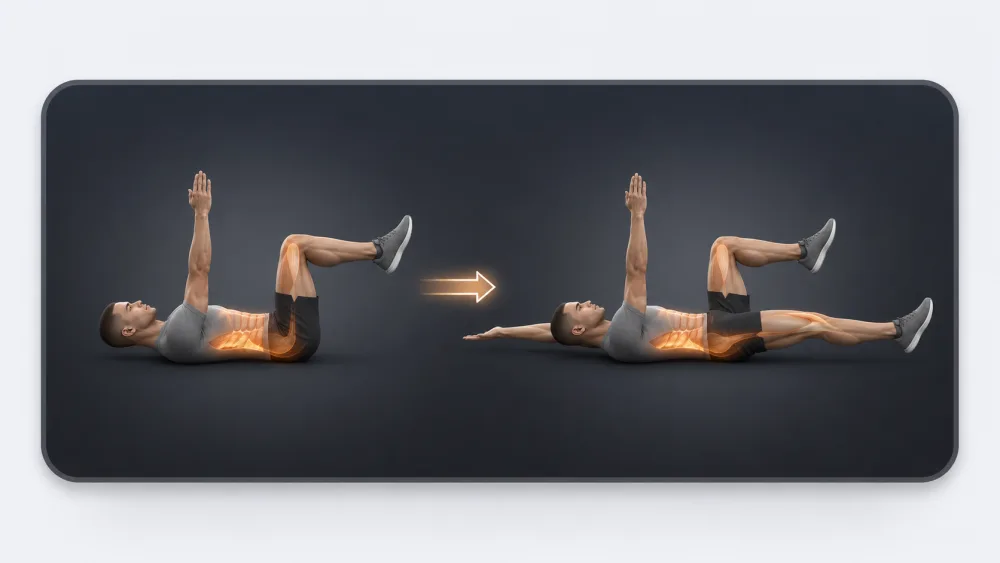
Exercise 4
Dead bug
- Volume
- 3 × 8 each side
- Rest
- 45 seconds
- Main task
- Trunk control while the limbs move
Press the lower back gently toward the floor. Extend one arm and the opposite leg slowly. End the reach sooner if your back lifts or you can only hold the position by holding your breath.
Endurance day: easy enough for full sentences
The endurance day supports the strength work. It is not another hard test. Choose a familiar activity: ride a bike for 40 to 60 minutes, or run easily for 30 to 45 minutes if you already run without problems. Brisk walking and steady hiking also work.
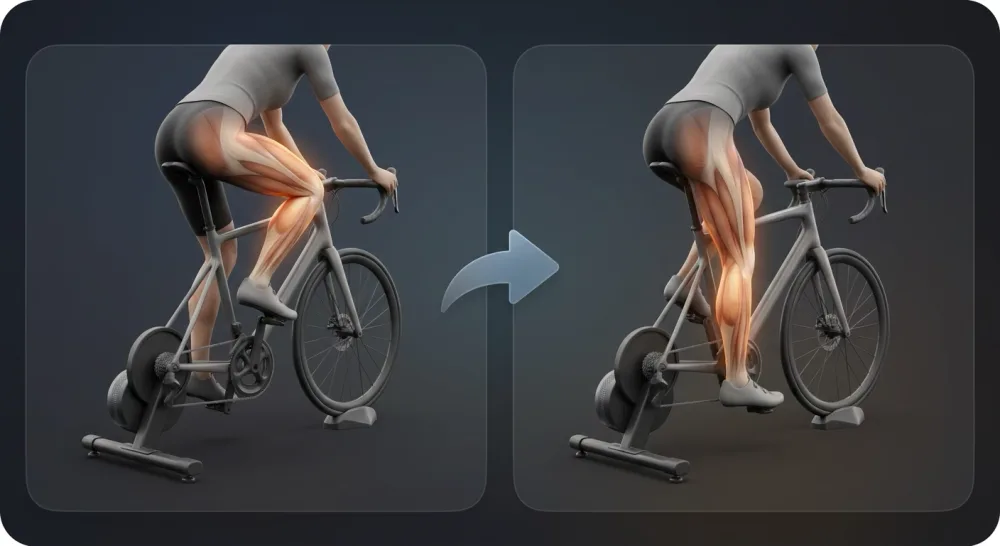
Use the talk test
You should be able to speak in full sentences. If you can only manage short phrases, reduce the pace or resistance. A watch heart-rate zone can add context, but it is only as useful as its settings and the underlying measurements.
Strength B: lateral control, balance, and upper back
The second strength session changes the emphasis. It covers lateral hip work, a controlled bridge, balance with trunk rotation, and the upper back, so the week does not repeat one circuit twice.
Exercise 1
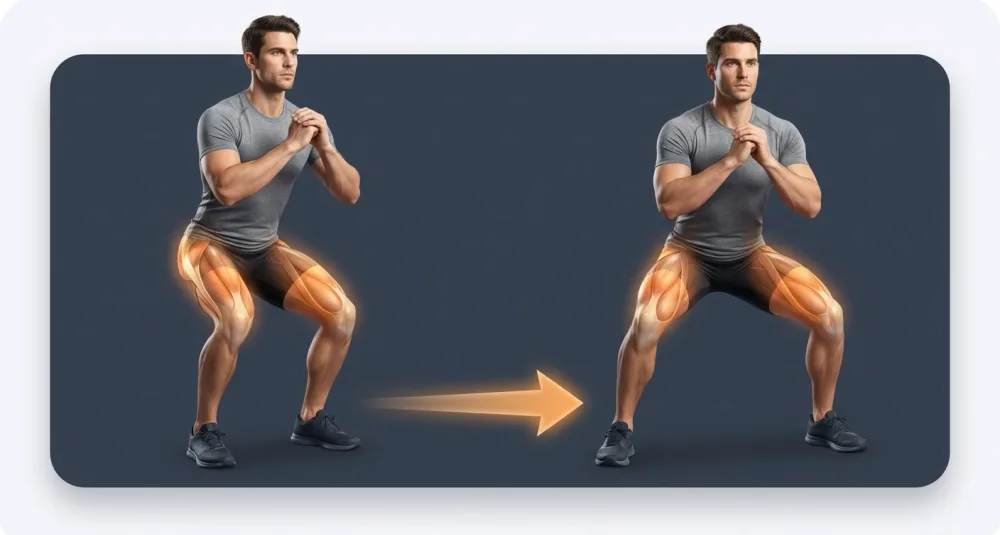
Lateral squat walk
- Volume
- 3 × 15 total steps
- Rest
- 45 seconds
- Main task
- Lateral leg control and hip drive
Stay in a shallow squat. Take eight steps in one direction and seven back in each set. Start the next set in the opposite direction. Keep the knees and toes pointing the same way, and avoid standing fully between steps.
Exercise 2
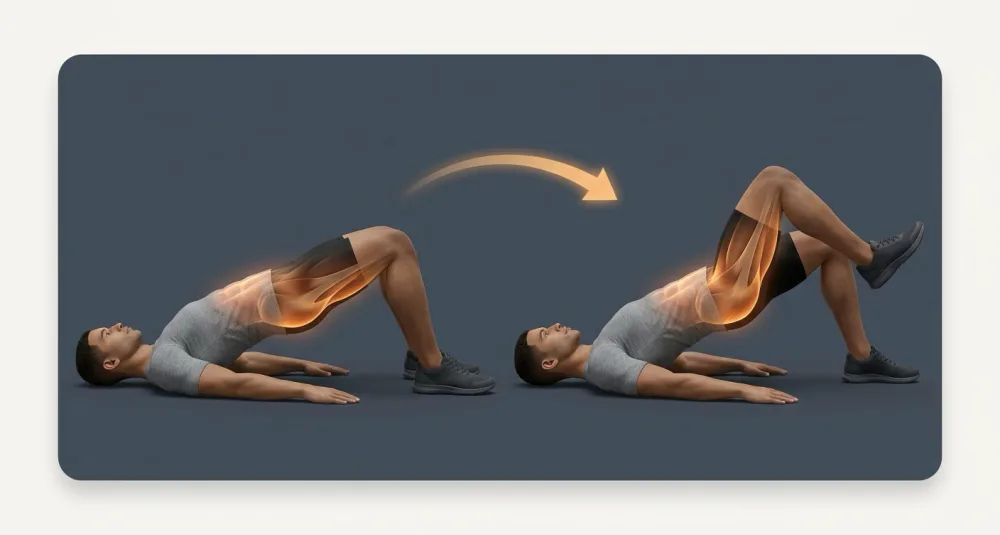
Glute-bridge march
- Volume
- 3 × 10 each side
- Rest
- 60 seconds
- Main task
- Hip extension and pelvic control
Lift the hips and raise one foot a few centimetres at a time. Keep both sides of the pelvis level. Lower and reset if your back arches or your hips drop with each step.
Exercise 3
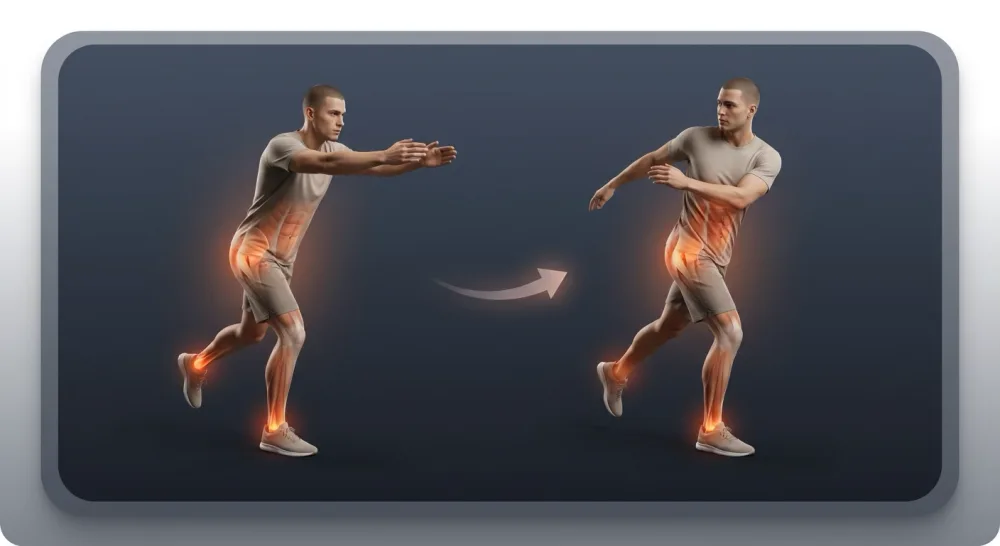
Single-leg balance with rotation
- Volume
- 3 × 10 on each standing leg
- Rest
- 45 seconds
- Main task
- Single-leg balance with controlled trunk rotation
Stand on one leg with a soft knee. On each standing leg, rotate five times to the left and five times to the right, returning to centre each time. Keep the standing knee quiet. Work beside a wall and touch it with one finger when needed.
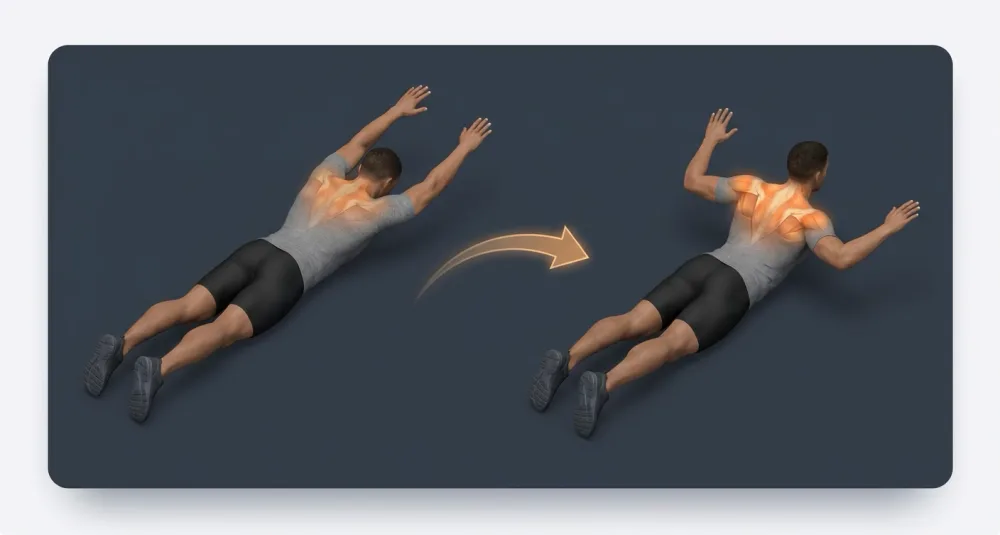
Exercise 4
Prone swimmer (Y–W)
- Volume
- 3 × 10 complete Y–W sequences
- Rest
- 45 seconds
- Main task
- Shoulder-blade control and upper-back work
Lift the hands slightly and move the arms slowly from a Y position to a W and back again. Keep the neck long and lift the chest only a little. End the set if the movement starts coming mainly from the lower back.
If you only have two training slots
Swipe the table sideways on a small screen to see the complete session.
| Day | Session | Adjustment |
|---|---|---|
| Tuesday | Strength A | Complete all four exercises as written. |
| Saturday | Strength B plus easy endurance | Do two sets instead of three for each strength exercise, then add 20–25 minutes of cycling, running, or brisk walking at conversational effort. |
This combination saves one training slot, but it reduces the planned work compared with the three-session week. If a 50- to 60-minute second session does not fit, keep both strength sessions and spread easy movement across short parts of your day. Do not replace the missing endurance day with an especially hard finishing interval.
Recovery belongs in the week
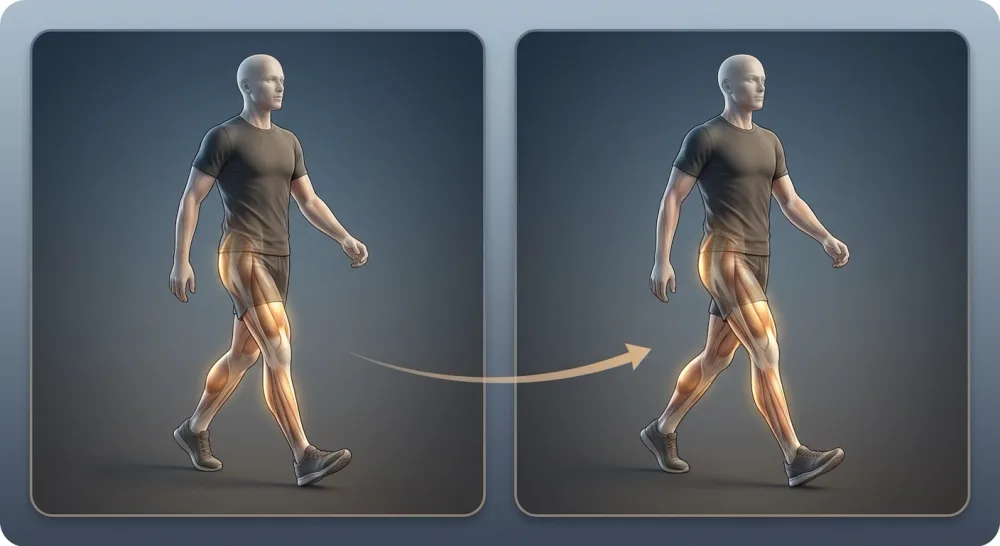
Optional: walk easily for 20–40 minutes
Choose flat ground and a pace that keeps your breathing calm. The walk is optional. Skip it when rest feels more appropriate.
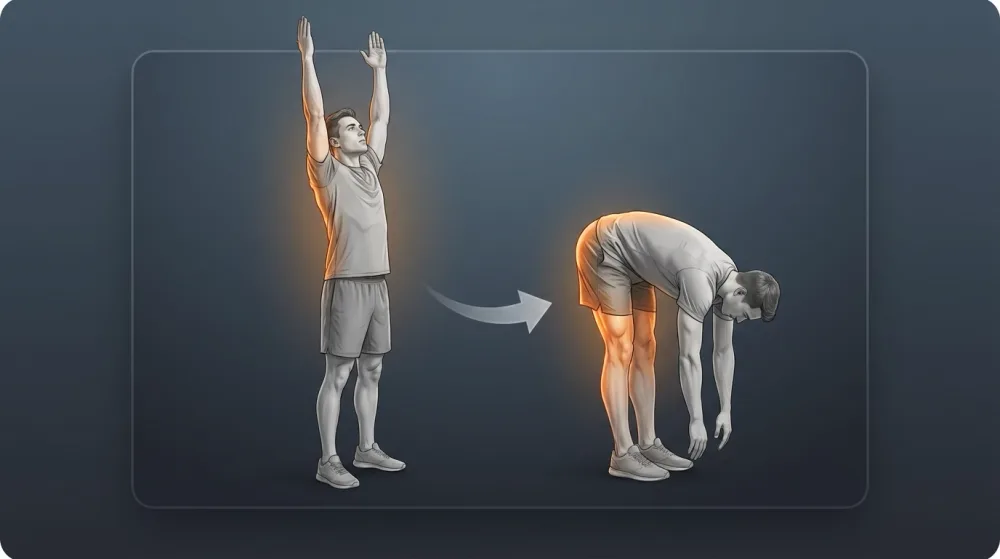
Optional: move gently for 3–6 minutes
Reach the arms up as you breathe in and hinge forward from the hips as you breathe out. Keep the knees soft and stop the range while it still feels calm and controlled.
Sleep, work stress, travel, and other sport all change how this week lands. A rest day does not require zero steps. It means no extra planned load needs to compete with recovery. Read why recovery days belong in a training plan for the wider context.
Change the training load cautiously
Fewer sets do not make a movement easier if coordination is the problem. Do not increase repetitions, added load, range of motion, and endurance time together.
If a movement still feels insecure with the support and shorter range described here, ask a trainer to help with set-up and technique. A physiotherapist is the better choice for pain, functional limits, or a return after injury. A complete multi-week progression belongs in the eight-week ski-preparation plan. This page only shows how one example week is organised.
When to stop and get help
Stop the exercise and contact a doctor: Stop for acute or joint pain, numbness, repeated weakness, or other symptoms that are unusual for you. A doctor can assess the symptoms and appropriate activity. A physiotherapist can assess persistent musculoskeletal pain, function, and return after injury. A trainer can help with exercise set-up and technique once medical concerns have been ruled out.
Call your local emergency number now: Get emergency help for sudden or persistent chest pain or pressure, severe shortness of breath, fainting, confusion, or being unable to speak normally because you cannot get enough air. These warning signs follow official guidance from the American Heart Association and MedlinePlus.
This plan cannot assess ski technique and does not replace ski instruction, medical care, or physiotherapy. It does not promise to prevent injury.
Discuss and adjust the week with the AI Coach
You can discuss this template with the AI Coach in SlopeReady at any time. The Coach can use your profile, saved plan, recent workouts, and available Apple Health recovery data when it proposes a better fit. It might suggest moving, shortening, or easing a session, or replacing it with a suitable catalogue option.
You see a lasting plan change as a proposal before it is applied, and it only becomes part of the plan after you approve it. The Coach can only work with the data available to it. It cannot see your exercise technique, pain, ski-boot fit, missing upstream data, or complete medical condition. The final decision remains yours.