
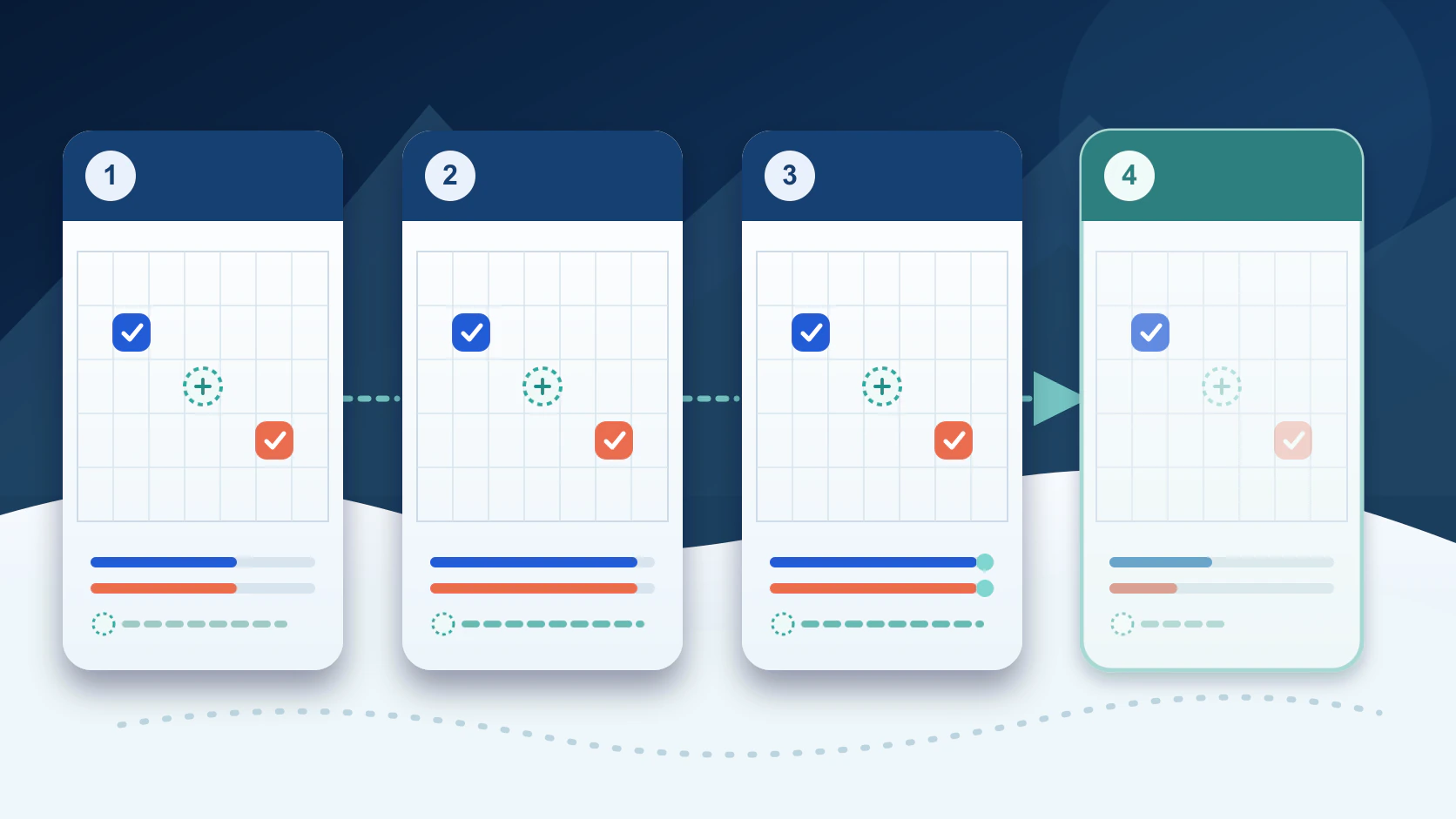
Choose the version that fits your week
The third session is an addition, not a requirement. If you already run, cycle, hike, or train your legs, count that work as part of the week.
Two sessions
Do session A and session B several days apart. This is the plan's complete base.
Three sessions
Place an easy endurance session between A and B. Keep it at a conversational pace and remove it first when your week gets tight.
You already train
Replace comparable lower-body sessions. Do not automatically add this plan on top of your current training.
The exercises are new to you
Use week 1 as a technique trial: two sets of the main exercises, one finisher round, and no added load.
Your four-week calendar
The days are examples for a trip after week 4. Move them as needed, but do not stack session A and B on consecutive days just to catch up.
Week 1
for example, Tuesday · Thursday · Saturday- Session A
- Session A · beginner version
- Session C · optional
- 25–35 min easy, familiar endurance work
- Session B
- Session B · beginner version
- Focus for the week
- Find a variation you can control for each exercise. Main exercises: 2 sets. Finisher: 1 round. No added load.
Week 2
for example, Tuesday · Thursday · Saturday- Session A
- Session A · standard version
- Session C · optional
- 30–40 min easy, familiar endurance work
- Session B
- Session B · standard version
- Focus for the week
- Main exercises: 3 sets. Finisher: 2 rounds. Range of motion, load, and tempo stay as they were in week 1.
Week 3
for example, Tuesday · Thursday · Saturday- Session A
- Session A · one small progression
- Session C · optional
- 30–45 min easy, familiar endurance work
- Session B
- Session B · one small progression
- Focus for the week
- Keep the volume from week 2. In both A and B, change reps, load, range of motion, or hold time for one exercise only.
Week 4
Adjust sessions around travel day and your familiar recovery time- Session A
- Session A · 2 sets
- Session C · optional
- Optional easy walk; no new endurance session
- Session B
- Session B · 2 sets or skip it
- Focus for the week
- Use familiar variations only. Finisher: 1 round. No jumps, intervals, max tests, or catch-up sessions. Skip B if it would remove your usual recovery time before the trip.
Before A and B: 6 minutes, no jumps
Move through the five steps at an easy pace. Before the first main exercise, do one practice set through a smaller range of motion; it does not count as a working set.
-
60 sec
Brisk marching
Place your whole foot on the floor and let your arms swing loosely.
-
8 reps
Squat to a step
Touch the step lightly, then stand back up. Keep your knees and feet pointing in the same direction.
-
6 per side
Shallow reverse lunge
Step one foot back briefly, then return to standing with control.
-
8 reps
Hip hinges
Push your hips back, keep your back long, then stand tall again.
-
8 reps
Calf raises
Lift both heels with control and lower them all the way down.
Session A: strength exercises with controlled movement
Finish all sets of an exercise before moving on. Start with the main exercises while your balance and concentration are fresh. End each set before you noticeably lose position, range of motion, tempo, or balance.
Exercise 1
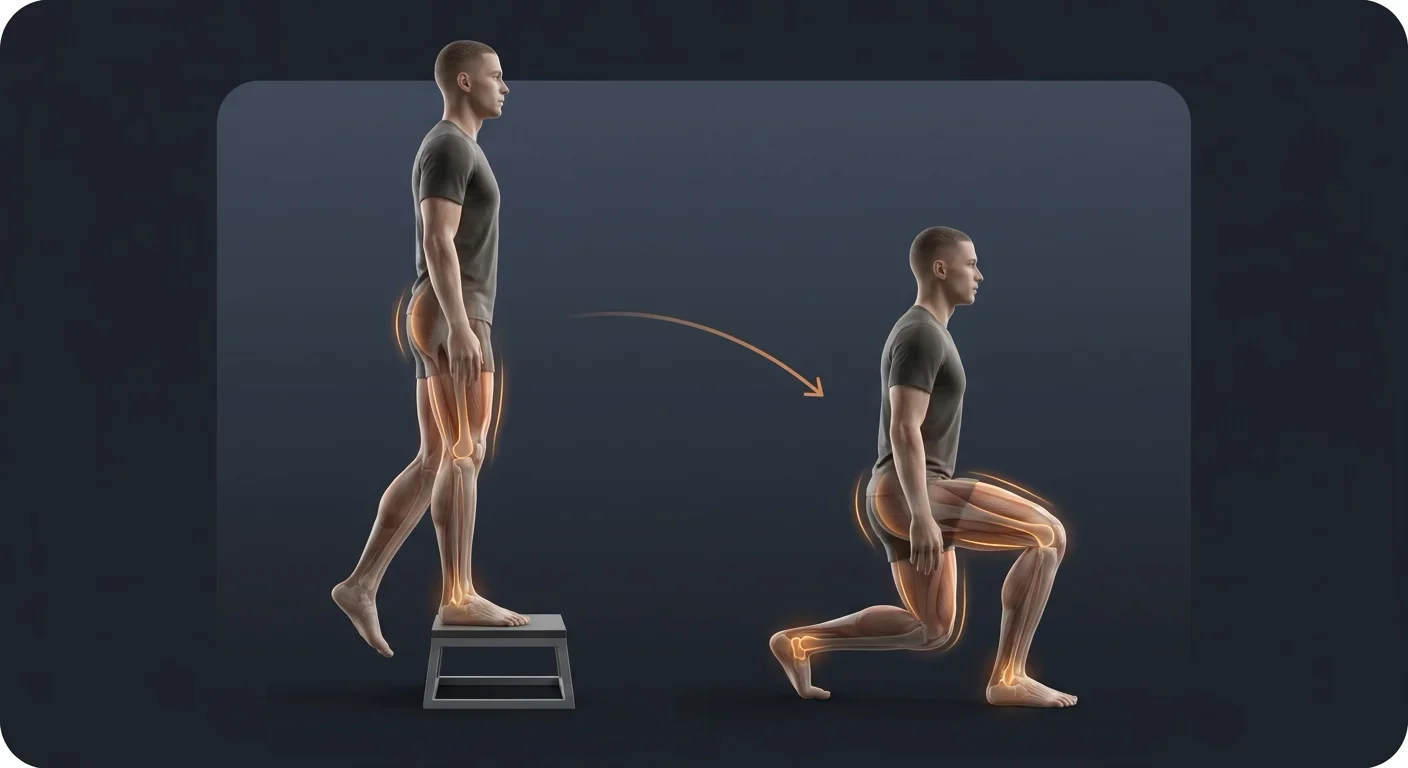
Eccentric step-down
- Sets and reps
- Weeks 1/4: 2 × 6 per side · Weeks 2/3: 3 × 6 · 3-second lowering phase
- Rest
- 60–75 seconds after both sides.
Focus on: Stand with your whole foot on the step. Lower the free heel for three seconds, then press back up with control. Keep your pelvis and standing foot steady.
Make it easier: Use a lower step, hold on lightly, or reduce the range of motion.
Exercise 2
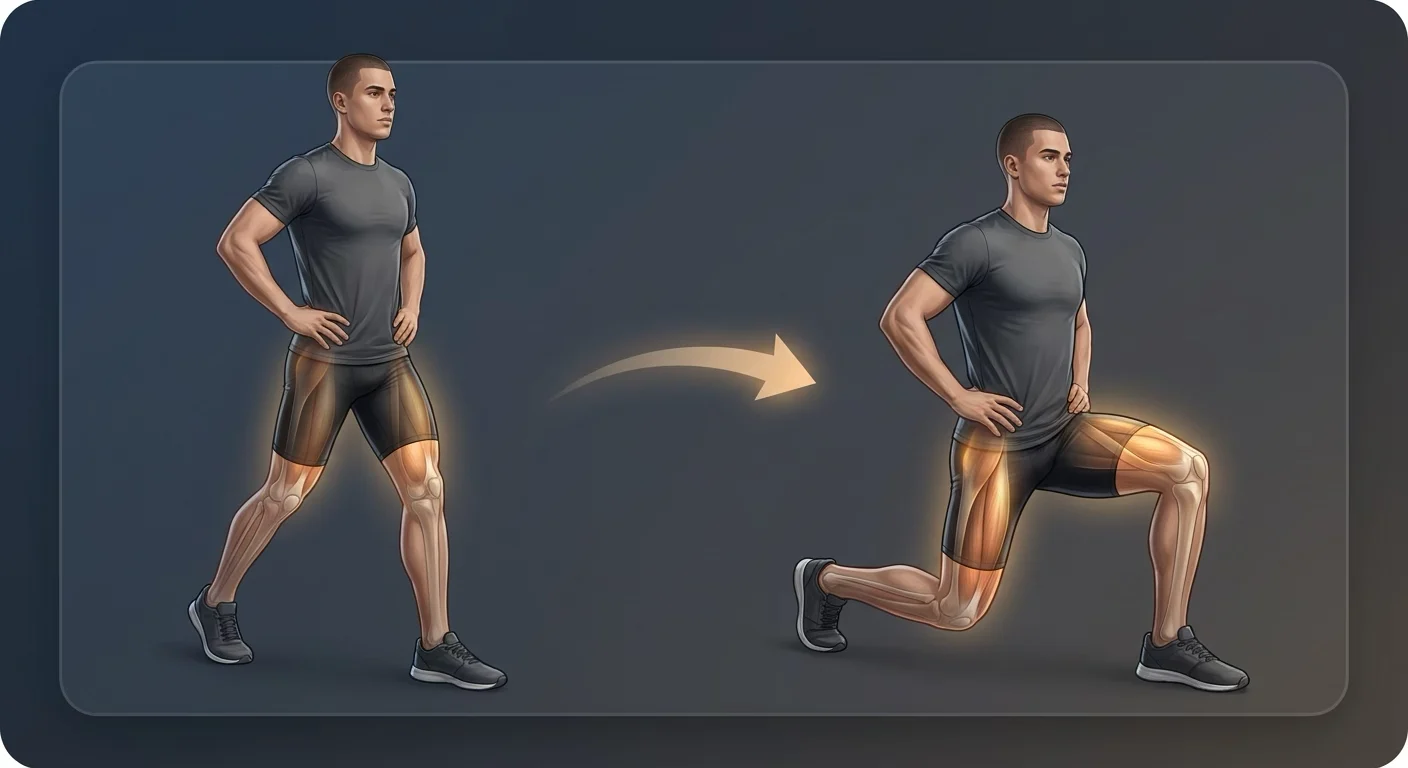
Forward lunge
- Sets and reps
- Weeks 1/4: 2 × 8 per side · Weeks 2/3: 3 × 8
- Rest
- 60–75 seconds after both sides.
Focus on: Step far enough forward, lower with control, then press back through your whole front foot. Keep your knee and toes pointing in the same direction.
Make it easier: Stay in a split stance, hold on, and move only up and down.
Exercise 3
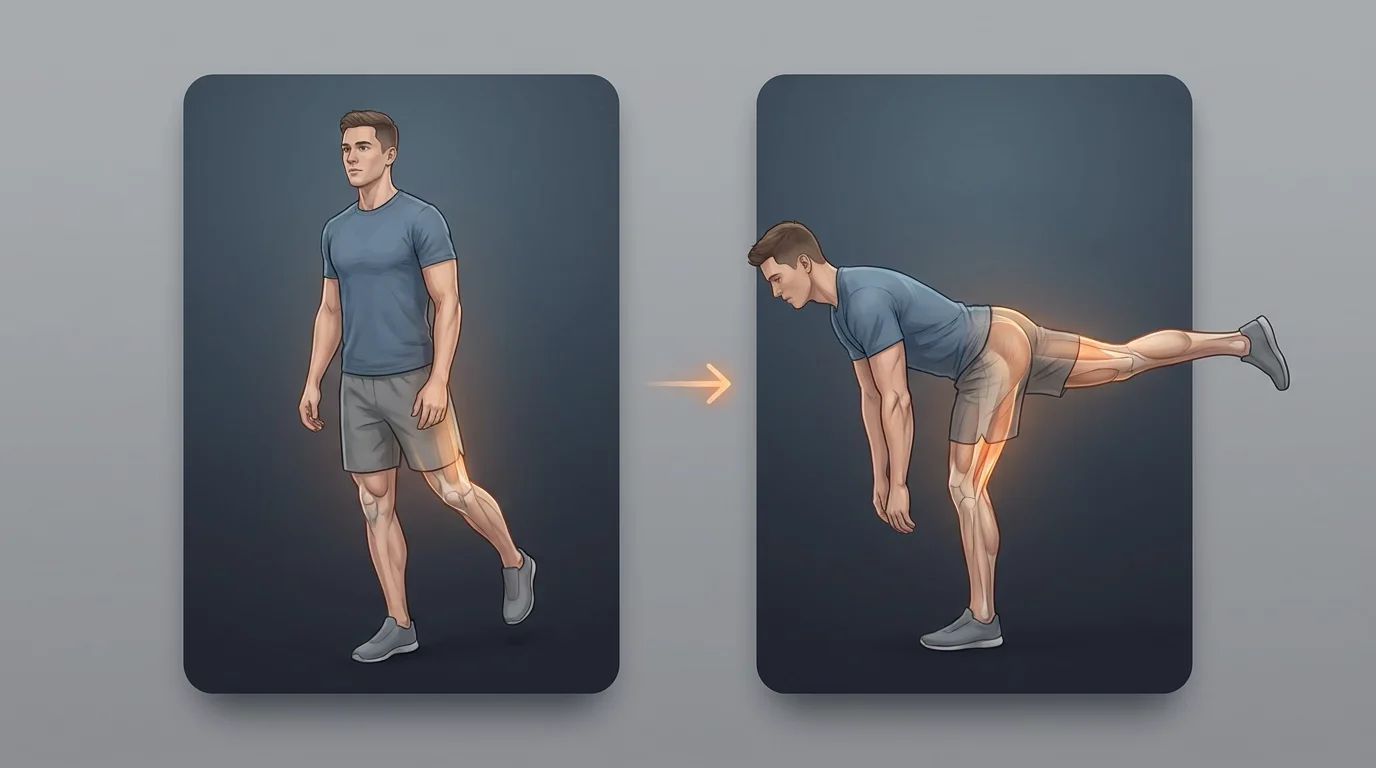
Single-leg Romanian deadlift
- Sets and reps
- Weeks 1/4: 2 × 8 per side · Weeks 2/3: 3 × 8
- Rest
- 60–75 seconds after both sides.
Focus on: Push your hips back and reach the free leg behind you. Stop before your back or pelvis shifts. Keep a slight bend in the standing knee.
Make it easier: Touch a wall with one hand or rest the toes of your free foot on the floor behind you.
Exercise 4
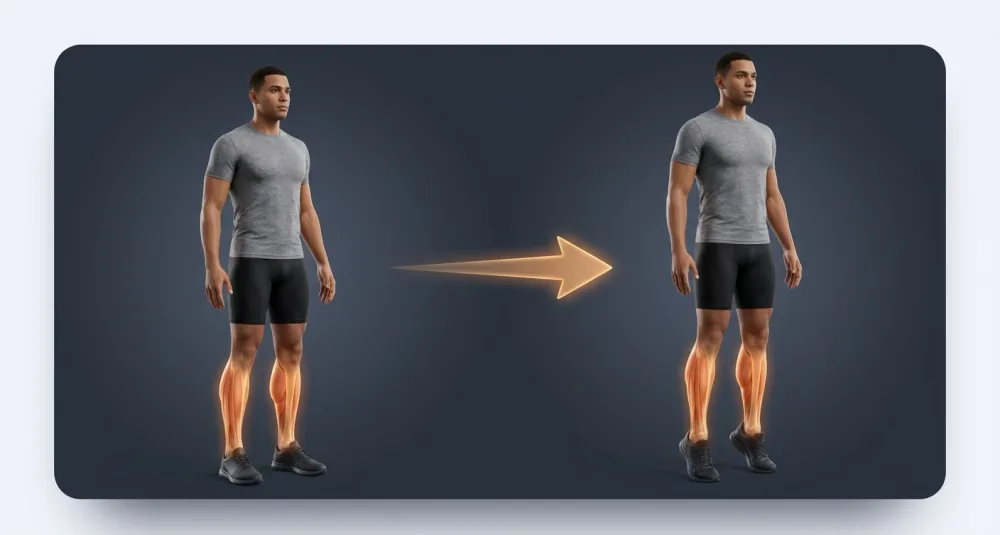
Calf raise
- Sets and reps
- 2 × 12 reps
- Rest
- 45 seconds.
Focus on: Lift both heels with control, pause briefly at the top, then lower them fully. Do not let your ankles roll outward.
Make it easier: Hold the wall and reduce the height.
Exercise 5
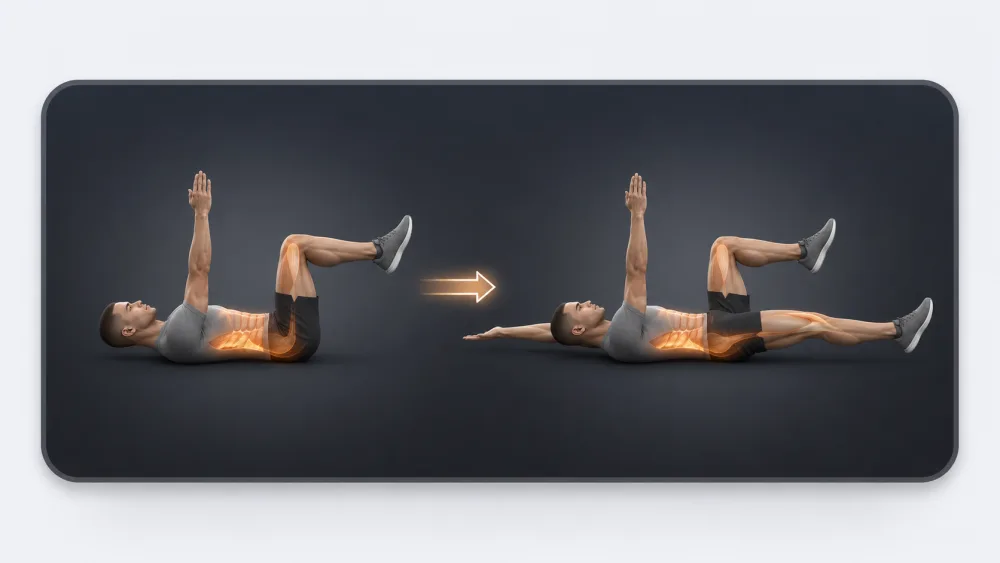
Dead bug
- Sets and reps
- 2 × 6 per side
- Rest
- 45 seconds.
Focus on: Keep your lower back still against the floor. Extend the opposite arm and leg slowly while breathing. End the movement before your back lifts.
Make it easier: Touch only your heel to the floor, or start by moving only your legs.
Session B: lateral control and strength endurance
This session also starts with the three exercises that demand more coordination. Lateral steps and the wall sit are the short finisher, not the start of the session.
Exercise 1
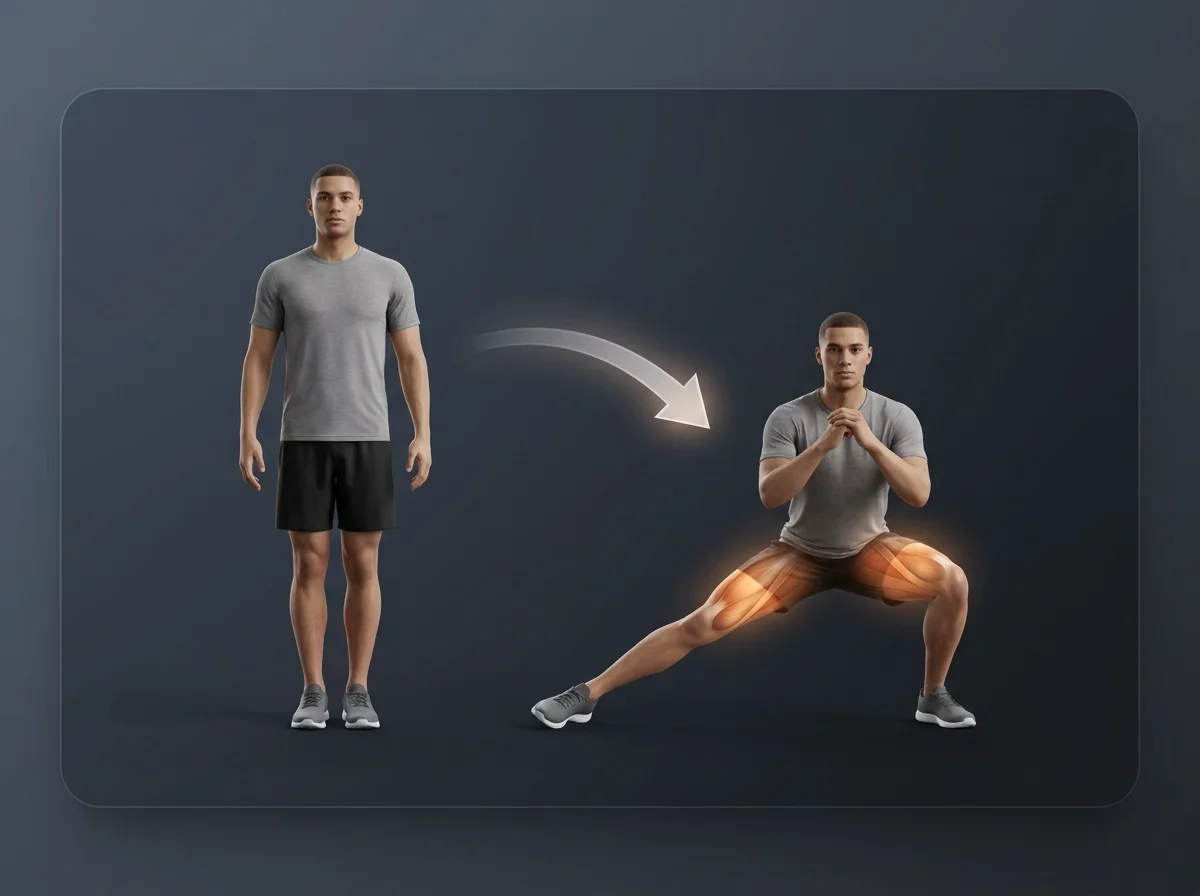
Lateral lunge
- Sets and reps
- Weeks 1/4: 2 × 8 per side · Weeks 2/3: 3 × 8
- Rest
- 60 seconds after both sides.
Focus on: Push your hips back over one leg while the other foot stays on the floor. Press through your whole working foot to return to the centre.
Make it easier: Use a shorter step and shallower depth, or hold on to a support.
Exercise 2
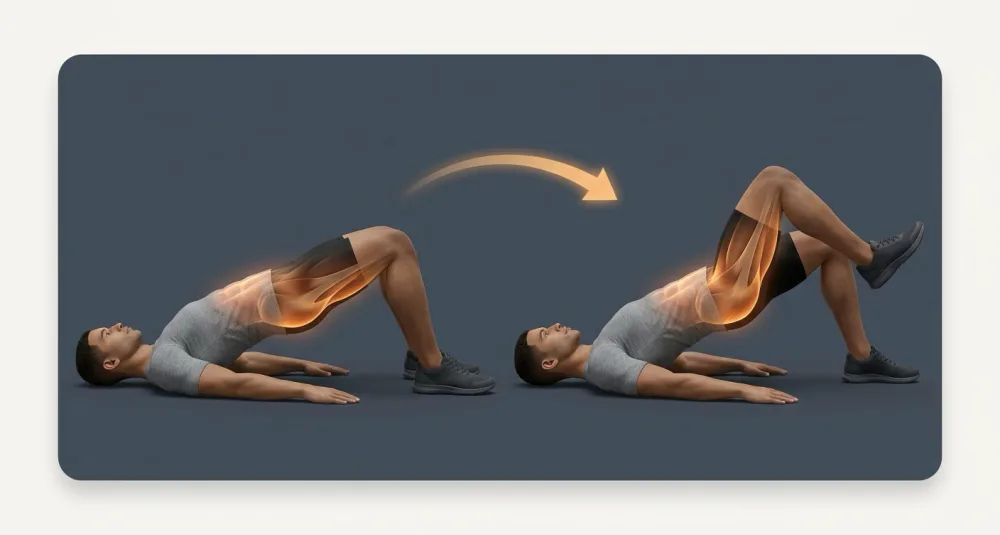
Glute bridge march
- Sets and reps
- Weeks 1/4: 2 × 8 per side · Weeks 2/3: 3 × 8
- Rest
- 60 seconds.
Focus on: Lift your hips. Raise one foot only as far as you can without letting your pelvis drop or tip to one side. Alternate slowly.
Make it easier: Keep both feet on the floor and do 10 regular glute bridges.
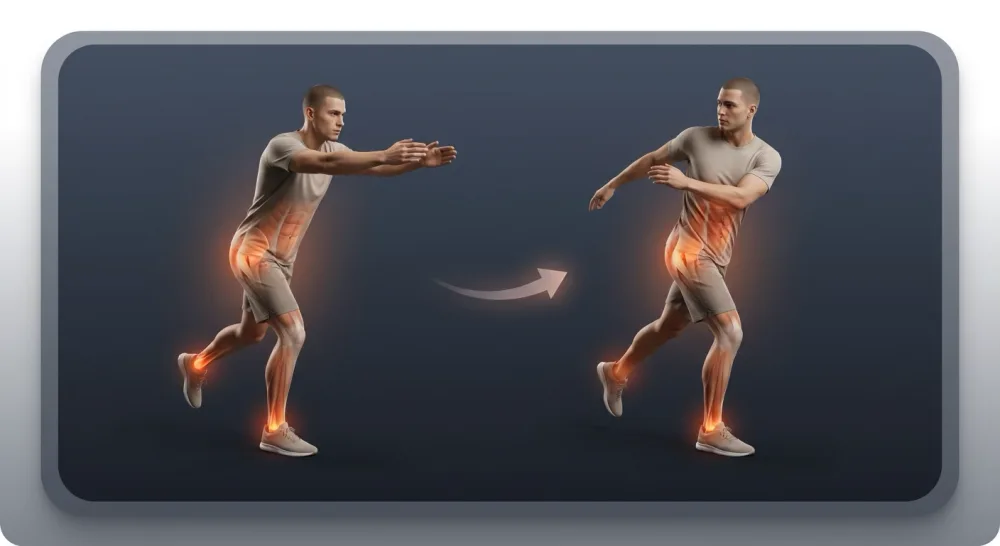
Exercise 3
Single-leg balance with torso rotation
- Sets and reps
- Weeks 1/4: 2 sets · Weeks 2/3: 3 sets · 5 turns right and left on each standing leg
- Rest
- 45 seconds after both legs.
Focus on: Bend the standing knee slightly. Turn your chest slowly, then return to centre after each turn. Keep your knee and foot pointing in the same direction.
Make it easier: Touch the wall with one finger and make a smaller turn.
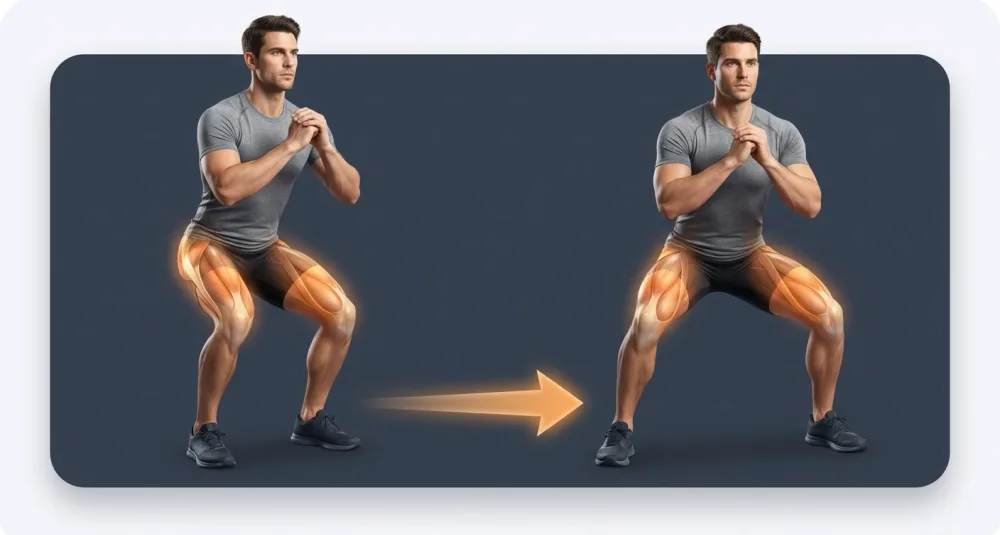
Exercise 4
Lateral steps in a half squat
- Sets and reps
- Weeks 1/4: 1 round · Weeks 2/3: 2 rounds · 8 steps in each direction
- Rest
- 30 seconds, then continue to the wall sit.
Focus on: Stay in a shallow squat. Place each foot with control and keep your knees and toes pointing in the same direction.
Make it easier: Stand taller and take smaller steps.
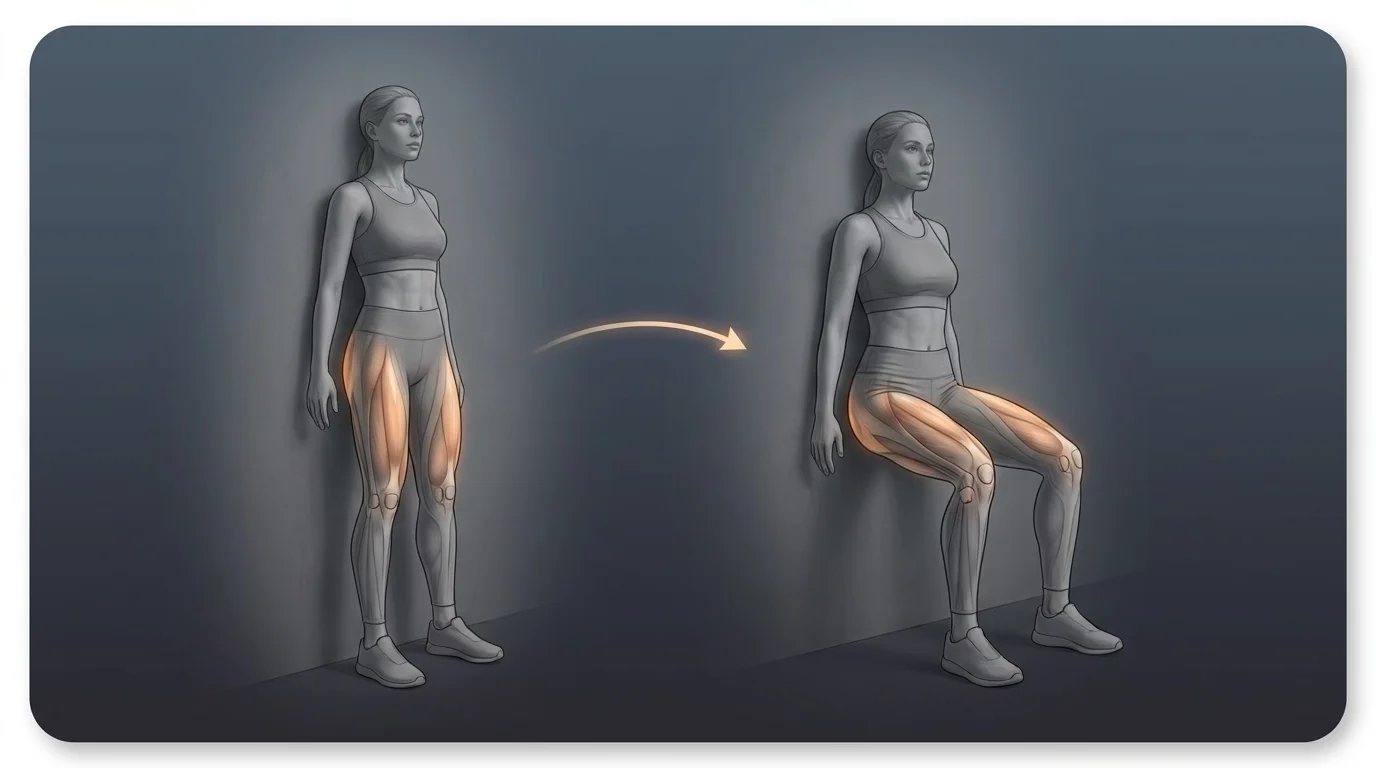
Exercise 5
Wall sit
- Sets and reps
- Weeks 1/4: 1 × 20–40 sec · Weeks 2/3: 2 × 20–40 sec
- Rest
- 75 seconds; then start the second round.
Focus on: Choose a height where your feet and knees stay steady and you can keep breathing. End the hold before you need to brace yourself with your hands.
Make it easier: Slide less deeply down the wall or hold for 15–20 seconds.
Week 3: one variable per session
Keep the same number of sets as in week 2. Choose one main exercise in session A and one exercise in session B for a small change. Keep everything else the same.
Add one repetition
Add one rep per side to one exercise without changing the other exercises.
Add a small amount of load
Use a light backpack or small dumbbells for one controlled exercise. Keep the sets and reps the same.
Increase the range of motion
Increase the step height or depth only as far as your pelvis, knee, and foot stay steady.
Hold for five seconds longer
Extend the wall sit only. Still end the movement before you lose position.
If you miss a session
The calendar needs to work after a busy week. Follow this order:
Do not double up
Do not add A or B the next day if that would put two strength sessions on consecutive days.
Remove the optional session first
Skip session C and keep the next strength session in its planned order.
Do not compress the plan
If only a few days remain before your trip, skip the missed session. Do not stack it into week 4.
Keep the note
Write down which session you missed. That is more useful than making the calendar look better after the fact.
What the sources support and what remains a programming choice
Research on alpine skiing describes repeated lower-extremity work alongside ongoing technical control. The review concerns racing for the most part; the small study by Koller and colleagues examined 24 healthy, fit recreational skiers after four hours of skiing. Turnbull, Kilding and Keogh (2009): physiology of alpine skiing, Koller et al. (2015): eccentric strength after four hours of recreational skiing
The ACSM review supports progressive strength training for strength, local muscular endurance, balance, and physical function in healthy adults. Its included interventions lasted at least six weeks. It therefore does not establish a complete four-week build-up or this exact plan. American College of Sports Medicine (2026): strength training for healthy adults
You can combine strength and endurance work in one programme, but this does not establish a universal weekly order. Training to momentary muscle failure is not a required standard. Warm-up research supports preparatory movement but did not test these six minutes. Grgic et al. (2022): training to muscle failure, Huiberts et al. (2024): combined strength and endurance training, Fradkin, Zazryn and Smoliga (2010): warm-up and physical performance
No source tested this calendar, the two sessions, repetitions, rest periods, progression, missed-session rules, or the reduction in week 4. Taper research in competitive athletes and Suva's exercise selection also provide no direct confirmation. These elements are editorial programme design. Bosquet et al. (2007): tapering in competitive athletes, Suva: fitness exercises for winter sports
Choose the right next step
General fitness or ski preparation?
Check what your current training already covers and which demands skiing adds.
Compare general fitness and ski preparationMuscle groups and exercise order
Read why legs, hips, core, balance, and endurance have separate jobs in ski preparation.
Read the ski fitness guideChoose or replace an exercise
Compare movement patterns, equipment, and easier variations without adding another exercise to the week.
Open the skiing exercise selectorA detailed leg session
Use the longer lower-body session if you want to look up individual exercises and progression in more detail.
Go to leg training for skiingAn alternative without a step or added load
Switch to a calm 30-minute session when you do not have the equipment for A or B.
Go to the home workoutOrganise two or three sessions
Explore a repeatable weekly structure beyond the four-week countdown.
Go to weekly planningUse more time for progression
Switch to the eight-week plan if you have enough time before your trip for a longer build-up.
Go to the eight-week planDiscuss changes with the AI Coach
In SlopeReady, you can ask the AI Coach how this template fits your saved plan. As context, it can use your profile, confirmed plan, recent workout summaries, and the recovery signals available from Apple Health.
The Coach can suggest moving or shortening a session, or replacing a catalogue exercise. You see a lasting change before you confirm it. The Coach does not observe your form and knows only the context available in the app.
SlopeReady reads the Apple Health data you permit for analysis and plan support. The app does not write to Apple Health, start live workout sessions, or record workouts, live heart rate, or GPS routes.
Product behaviour verified in the current SlopeReady code on August 12, 2026. Terms of Use, Privacy Policy