

ChatGPT Health can use connected Apple Health data for eligible adults in the United States. It can help you discuss sleep, activity, workouts, and an exercise routine using the information you allow it to read. For a one-off explanation, that may be enough.
So why install a separate training app? SlopeReady has a narrower job. It keeps a visible training plan, shows where the evidence is incomplete, and lets you review a proposed change before it becomes part of the week you follow.
ChatGPT Health removes much of the copy-paste work
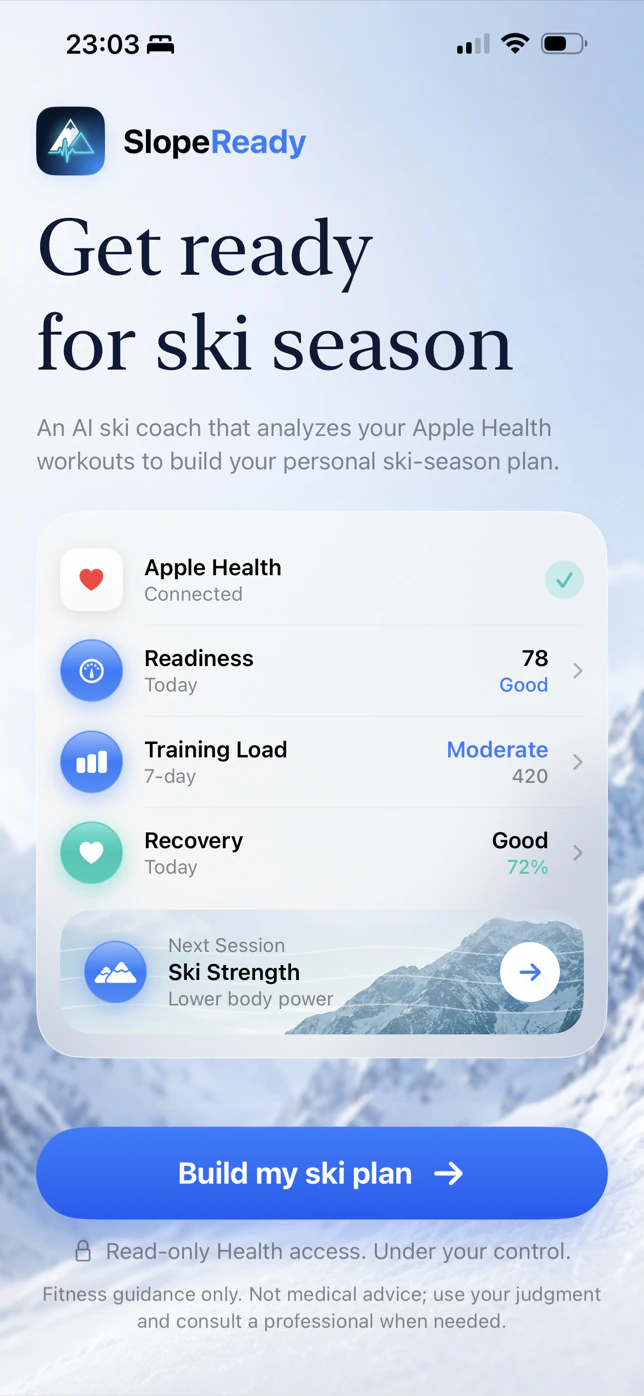
Connecting Apple Health means you no longer need to type every workout and sleep value into each question. ChatGPT can use the categories you permit. Data from a wearable or fitness app may also be available when that service writes it to Apple Health.
Coverage still varies by app and metric, and connecting Apple Health requires an iPhone. ChatGPT has read-only access to the connected Apple Health information. It cannot update those records.
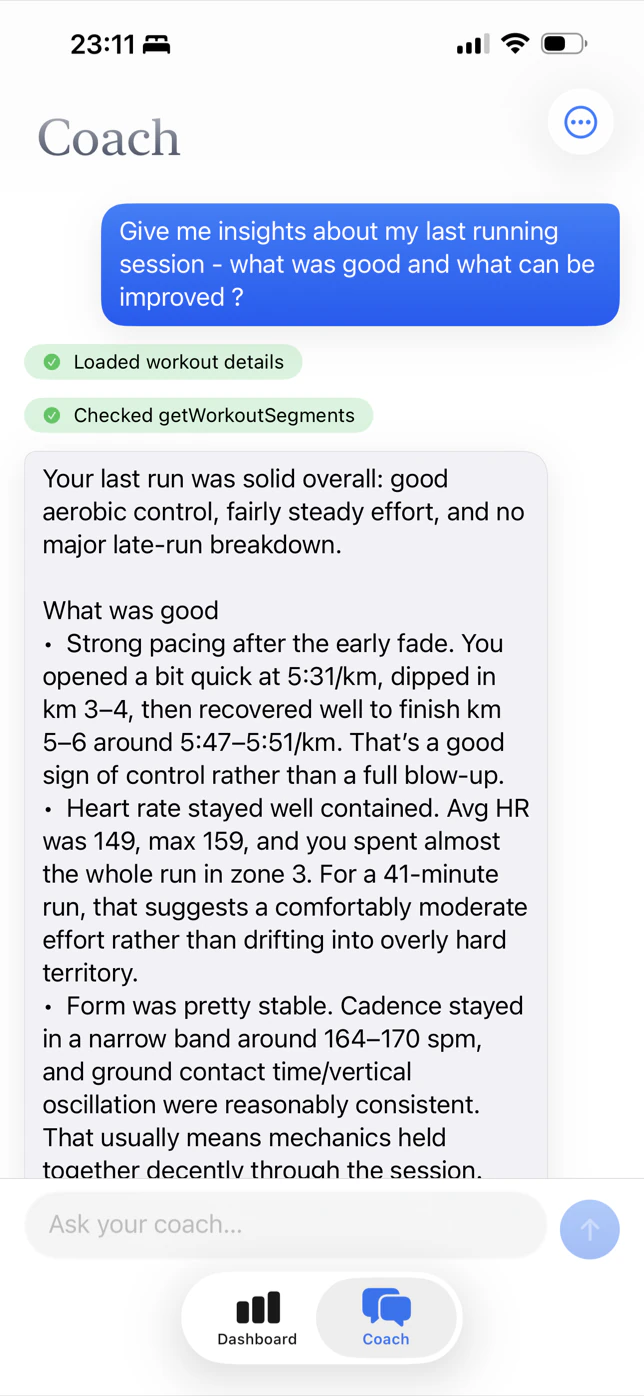
This makes ChatGPT Health useful for questions such as “Help me understand yesterday's run” or “How should I think about my routine this week?” It can explain available context and discuss possible next steps.
An answer and a changed plan are separate steps
Understanding a workout is one job. Discussing the next session is another. A training product must then prepare the exact change, show which days it affects, and keep the accepted result in the plan.
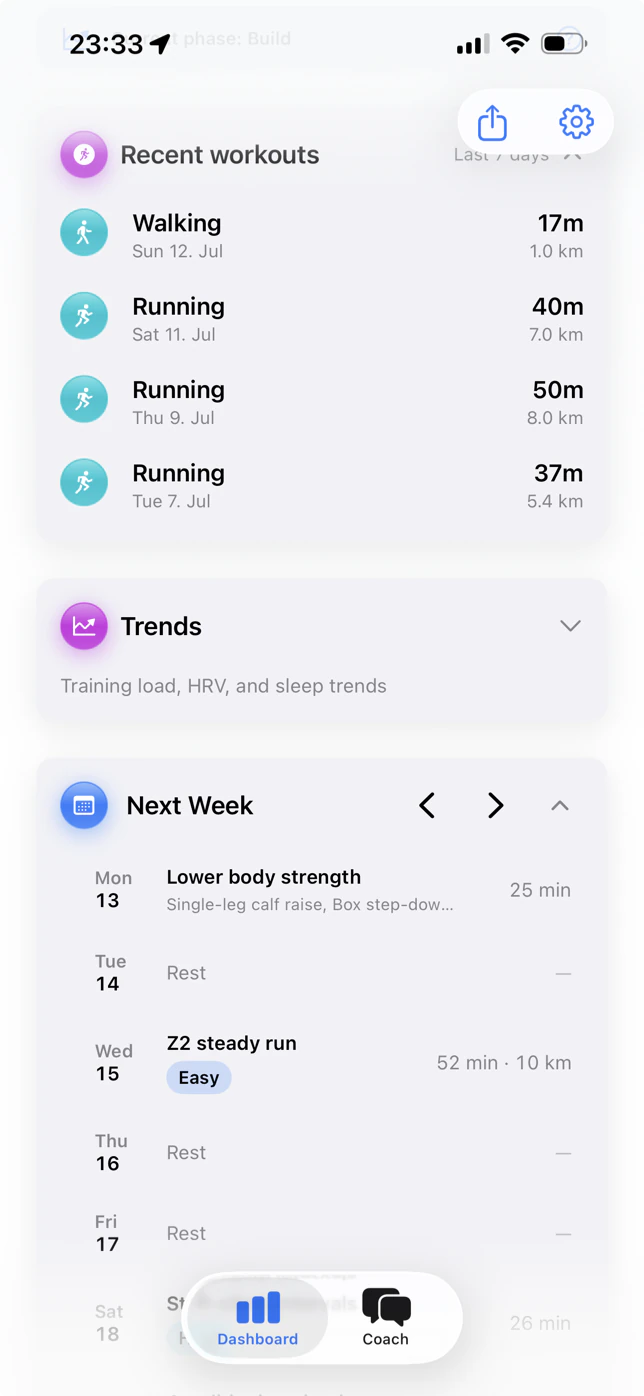
SlopeReady stores a rolling plan on your iPhone. When you ask to move, shorten, or replace a session, the coach presents a proposal with Apply and Cancel choices. Nothing changes until you approve it. Once accepted, the revision remains part of the plan after the conversation ends.
A hard Wednesday run before Thursday intervals
Suppose Wednesday's run felt harder than expected and Thursday still contains intervals. You open SlopeReady and ask for a review. The app can place the recorded run beside the current plan, recent training load, and the readiness inputs that reached Apple Health. If sleep or HRV is missing, the gap remains visible.
The review does not change Thursday by itself. You decide what to do next and ask, for example, “Move Thursday's intervals to Saturday.” SlopeReady prepares the change and waits for your approval. If you apply it, the revised days remain visible in the plan you return to later.
Apple Health context
Your question to the coach
The plan you follow
When ChatGPT Health may be enough
ChatGPT Health may suit you when you want to understand a workout, discuss a routine, or ask a broad question using data you chose to connect. It may also be the better fit if you already maintain your plan with a human coach, a calendar, or your own notes.
You do not need another app merely because ChatGPT can read Apple Health.
When SlopeReady fits the job
SlopeReady is for the workflow around the answer. You can see the current plan beside the discussion, check which inputs are missing, review a concrete change, and decide whether to keep it. The accepted revision remains available on the next day instead of living only inside one reply.
Choose by the work you want the tool to carry: a conversation about your data, or a maintained plan that records the changes you approve.
You keep control of the data and the decision
Both products use read-only access to Apple Health. SlopeReady keeps raw Apple Health data on your iPhone. When you choose an AI feature, it sends a minimized, inspectable coaching context rather than the raw sample history.
SlopeReady also keeps missing inputs visible and waits for your confirmation before a coach proposal changes the plan. It supports fitness and training decisions. It does not diagnose or treat medical conditions.
Use the answer in the week you are training
ChatGPT Health can help you ask a better question about your Apple Health data. SlopeReady helps you review the resulting plan change, approve it, and find the revised week again when you return.