
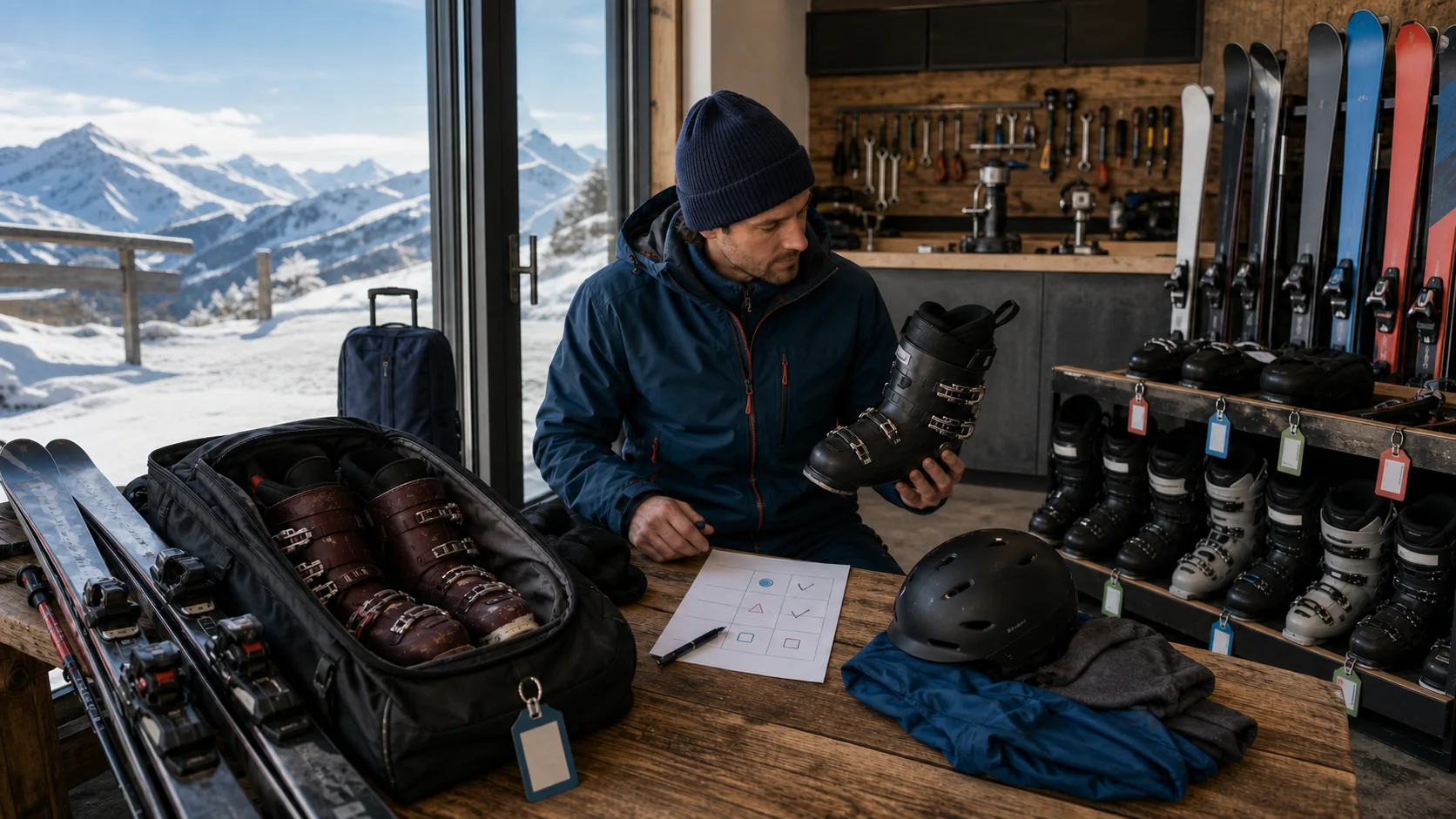
You do not need to own everything or rent everything. A mixed setup often works better: keep personal clothing and consistently well-fitting items, then rent heavy equipment or anything you have not settled on.
A rule such as “buy after ten ski days” ignores transport, servicing, storage, resale, growth and rental tier. Use real quotes and make a separate decision for each item.
Once you know what will travel with you, continue with the ski-trip packing checklist.
Four routes you can combine
Rent at the destination
Useful for air or rail travel, a first trip, and easy ski swaps. Check opening hours, collection and return before booking.
Rent near home or for the season
You can settle fit before travelling while postponing purchase, storage and upkeep. Season rental is not available everywhere.
Buy selectively
Do not default to a complete set. Start with the item whose fit or availability repeatedly gets in the way of your ski days.
Postpone the choice
Another rental or demo day can cost less than the wrong purchase while your style, size or trip frequency is still uncertain.
Decide by item
“More likely to rent” and “more likely to own” are starting points, not rules. Always resolve the final column before booking or buying.
Swipe sideways to see the full table.
| Item | More likely to rent | More likely to own | Check first |
|---|---|---|---|
| Skis, bindings and poles | Early trips, changing ability or terrain, limited storage, or travel by air or rail. | Frequent use, stable preferences, and a realistic plan for transport, storage and servicing. | The booked ski category, whether poles are included, and that the binding is set and checked for you and the actual boot. |
| Ski boots | First attempts, rare use, changing size or preferences that are not yet clear. | Regular skiing and recurring fit trouble after an in-person fitter has selected the boot. | Enough time to try both boots, a confirmed size and fit, and the same boot used for the binding check. |
| Helmet | When the shop supplies a snow-sport model in the right size with a condition you can verify. | When you value repeatable fit and a known history of use. | Fit, suitability for the activity, visible condition and current manufacturer replacement guidance. Ownership alone does not make a helmet safe. |
| Goggles | When a provider explicitly stocks them and you can test fit, view and condition. | When you need a reliable match with your helmet, vision correction and usual light conditions. | Helmet compatibility, field of view, lens condition and whether goggles are actually included. |
| Jacket and ski trousers | A first trip, tight baggage allowance or rare use, but only when size and service are confirmed. | Repeated use, personal fit and a layering system you already understand. | Whether clothing is available, what is included, size availability and the process for replacing a wet item. |
| Base layers, socks and gloves | These are rarely part of a rental package. Rent only when the provider clearly confirms the item, condition and fit. | Usually practical as personal gear because size, skin contact and availability are known before the trip. | The right size, a smooth fit without folds, and enough time to dry items between ski days. |
| Children's equipment | During rapid growth, changing ability or a short season; destination or season rental may make size changes easier. | With more stable sizing, frequent use, or a credible hand-down and resale plan. | Recheck size and fit every season. Do not size for future growth; confirm package contents, exchanges and helmet separately. |
Skis, bindings and poles
- More likely to rent
- Early trips, changing ability or terrain, limited storage, or travel by air or rail.
- More likely to own
- Frequent use, stable preferences, and a realistic plan for transport, storage and servicing.
- Check first
- The booked ski category, whether poles are included, and that the binding is set and checked for you and the actual boot.
Ski boots
- More likely to rent
- First attempts, rare use, changing size or preferences that are not yet clear.
- More likely to own
- Regular skiing and recurring fit trouble after an in-person fitter has selected the boot.
- Check first
- Enough time to try both boots, a confirmed size and fit, and the same boot used for the binding check.
Helmet
- More likely to rent
- When the shop supplies a snow-sport model in the right size with a condition you can verify.
- More likely to own
- When you value repeatable fit and a known history of use.
- Check first
- Fit, suitability for the activity, visible condition and current manufacturer replacement guidance. Ownership alone does not make a helmet safe.
Goggles
- More likely to rent
- When a provider explicitly stocks them and you can test fit, view and condition.
- More likely to own
- When you need a reliable match with your helmet, vision correction and usual light conditions.
- Check first
- Helmet compatibility, field of view, lens condition and whether goggles are actually included.
Jacket and ski trousers
- More likely to rent
- A first trip, tight baggage allowance or rare use, but only when size and service are confirmed.
- More likely to own
- Repeated use, personal fit and a layering system you already understand.
- Check first
- Whether clothing is available, what is included, size availability and the process for replacing a wet item.
Base layers, socks and gloves
- More likely to rent
- These are rarely part of a rental package. Rent only when the provider clearly confirms the item, condition and fit.
- More likely to own
- Usually practical as personal gear because size, skin contact and availability are known before the trip.
- Check first
- The right size, a smooth fit without folds, and enough time to dry items between ski days.
Children's equipment
- More likely to rent
- During rapid growth, changing ability or a short season; destination or season rental may make size changes easier.
- More likely to own
- With more stable sizing, frequent use, or a credible hand-down and resale plan.
- Check first
- Recheck size and fit every season. Do not size for future growth; confirm package contents, exchanges and helmet separately.
Compare your real costs
Use a period you can realistically predict. Make a separate sheet for each item.
Enter an amount or short note in each field. The page does not send or store these entries. Print or save the page as a PDF from your browser before closing it.
The real quote for your dates and equipment tier, booking fee, damage terms and the journey to the shop.
Purchase price, professional fitting, bag or transport accessories, and delivery where relevant.
Servicing, repairs, baggage fees, storage, and time spent transporting gear or visiting a workshop.
Realistic seasons and ski days before size, ability, preference or condition is likely to change.
Subtract only a cautious expected resale value. Planning to sell does not guarantee a sale.
Without forcing a price on it, note the value of swaps, familiar fit, lighter travel or immediate access.
Compare rental cost over the chosen period with purchase price plus ownership costs minus a cautious resale value. When the totals are close, let the more practical option win.
Three realistic decisions
First ski trip by air
Rent skis, poles and initially boots at the destination. Bring personal base layers, socks and gloves. Reserve a helmet or clothing only after the provider confirms the size and package. This avoids an early full-set purchase and extra sports baggage.
Adult who skis regularly and drives
Properly fitted personal boots may reduce a recurring fit problem. Keep renting or demoing skis until your use and preferences are stable. Buy only when servicing, storage and transport are sorted.
A child who grows between seasons
Check destination or season rental with size exchanges. Personal clothing, socks and gloves are often easier to plan. For the helmet, use current fit, condition and known history; recheck size rather than leaving growth room.
Rental pre-booking checklist
A “complete package” has no universal contents. Get these points confirmed in writing or in the booking.
Checklist at pickup
Take your time before leaving the shop. Do not alter the binding or boot yourself.
Ask staff to confirm the boot fit and the ski-binding-boot system check. Do not alter the binding or boot yourself.
Buying used: only with a clear history
Used skis can be a middle option when a qualified shop checks condition, compatibility and the binding. Add likely servicing to the purchase cost. An advert description is not an inspection.
Do not buy a helmet with an unknown history because it looks clean. A low price on used boots also cannot replace the right size, shape and an in-person fit.
Where SlopeReady fits
SlopeReady does not choose skis, inspect bindings, fit boots or book rental equipment. Use qualified staff and the provider's current information for those jobs.
With your permission, the app reads available workout and recovery data from Apple Health. The AI Coach can consider those data alongside your saved preparation plan and propose changes. You approve any change before it is saved to the plan.